- Al Sajaa Industrial - Emirates Industrial City – Sharjah

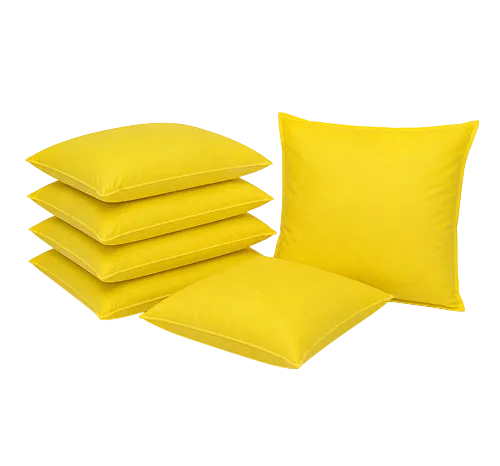
Chemical spills don’t follow rules. They pool in confined corners, collect beneath machinery, gather around pipework fittings, and spread into spaces where flat absorbent pads simply cannot reach. Chemical Absorbent Pillows are engineered specifically for these situations — flexible, high-capacity cushion absorbents that conform to irregular surfaces, compress into tight spaces, and deliver fast, reliable absorption across the full spectrum of hazardous and non-hazardous chemical liquids.
Our Chemical Absorbent Pillow range offers two sizes — the SL-CC1 for targeted small-quantity spill response and the SL-CC2 for high-volume, heavy-duty chemical absorption — both built on the same foundation of spunbond polypropylene outer construction, treated hydrophilic absorbent core, and stitched perimeter seaming that keeps the pillow structurally intact and chemically safe from first contact to final disposal.
Both models are yellow — the internationally recognised colour code for chemical-specific absorbents — ensuring fast, accurate identification in time-critical spill response situations. Both absorb acids, alkaline solutions, acetate, chlorinated solvents, benzene, toluene, water, oil, and the full range of industrial chemical liquids encountered in manufacturing plants, chemical processing facilities, laboratories, and chemical storage environments.
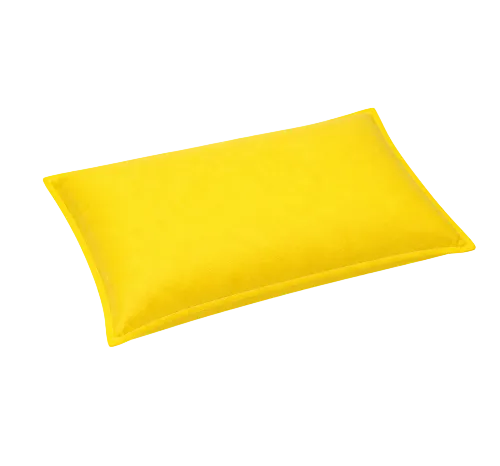
The SL-CC1 is the precision spill response pillow — compact, targeted, and purpose-built for drip trays, valve maintenance, pipework operations, and minor leaks in confined or difficult-to-access locations. At 4.5 litres of chemical absorption capacity per kilogram and a flexible 25×40cm cushion format, it delivers fast, effective containment exactly where the spill is — without unnecessary material consumption or waste. Packaged in a practical box of 20 cushions, it is the standard first-response chemical pillow for everyday facility spill management.
Best for: Drip trays, minor leaks, valve and pipework maintenance, confined and hard-to-reach spill locations, laboratory spill response kits.
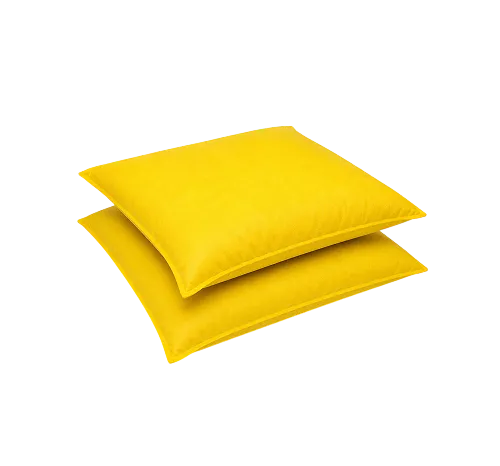
The SL-CC2 is the heavy-duty chemical pillow for serious spill scenarios. With 15 litres of chemical and water absorption capacity — more than three times that of the SL-CC1 — and a generous 40×40cm square format, it is engineered for larger pooling events, high-flow leaks, wide drip tray coverage, and any application where smaller pillows would require repeated replacement before the task is complete. Each SL-CC2 pillow does the work of multiple standard-size alternatives, reducing deployment time, handling exposure, and saturated waste volume per incident. Packaged in a box of 10 cushions per box.
Best for: Large drip trays, IBC containment, high-volume spill events, reactor and production line maintenance, wide pooling areas, heavy industrial chemical environments.
| Specification | SL-CC1 — Small | SL-CC2 — Large |
|---|---|---|
| Model | SL-CC1 | SL-CC2 |
| Size | 25 × 40 cm | 40 × 40 cm |
| Chemical Absorption Capacity | 4.5 L/Kg | 15 L/Kg |
| Water Absorption Capacity | 2.7 L/Kg | 15 L/Kg |
| Net Weight | 7 Kgs | 7 Kgs |
| Pack Quantity | 20 Cushions per Box | 10 Cushions per Box |
| Qty per Pallet | 24 | 20 |
| Color | Yellow | Yellow |
| Outer Layer | Spunbond Polypropylene | Spunbond Polypropylene |
| Core | Treated Hydrophilic Absorbent | Treated Hydrophilic Absorbent |
| Construction | Stitched Perimeter | Stitched Perimeter |
| Type | Hydrophobic | Hydrophobic |
| Best For | Minor leaks, drip trays, confined spaces | High-volume spills, large drip trays, IBC containment |
Choose the SL-CC1 if your primary requirement is targeted, everyday spill response — drip trays, valve maintenance, minor leaks, and locations where a compact, flexible pillow outperforms flat absorbents. The box of 20 makes it a practical, cost-efficient standard stock item for general facility spill management.
Choose the SL-CC2 if your facility handles higher-risk chemical volumes, larger pooling events, or wide-area drip tray applications where absorption capacity and surface coverage are the deciding factors. The 15-litre capacity per kilogram significantly reduces the number of pillows required per incident — lowering handling exposure, response time, and saturated waste disposal volume.
For facilities managing both routine maintenance spills and larger chemical events, stocking both sizes delivers a complete, graduated chemical pillow response capability across all spill scales.
Both models are designed to absorb a wide spectrum of hazardous and non-hazardous chemical liquids, including acids, alkaline solutions, acetate, chlorinated solvents, benzene, toluene, water, oil, and the broad range of industrial chemical substances encountered across manufacturing, processing, and laboratory environments.
Chemical Absorbent Pillows from this range are used across industrial manufacturing plants, chemical processing and storage facilities, oil and gas operations, pharmaceutical production, research and analytical laboratories, automotive service environments, and any facility that handles, stores, or works with hazardous chemical liquids requiring fast, reliable, and compliant spill containment.
Chemical Absorbent Pillows are engineered specifically for these situations — flexible, high-capacity cushion absorbents that conform to irregular surfaces.
The SL-CC1 Chemical Absorbent Pillow is a purpose-engineered spill response solution designed to absorb a wide spectrum of hazardous and non-hazardous chemical liquids quickly and safely.
The SL-CC2 is a large-format, heavy-duty chemical absorbent pillow engineered for high-volume chemical spill absorption in demanding industrial, laboratory, and chemical storage environments.
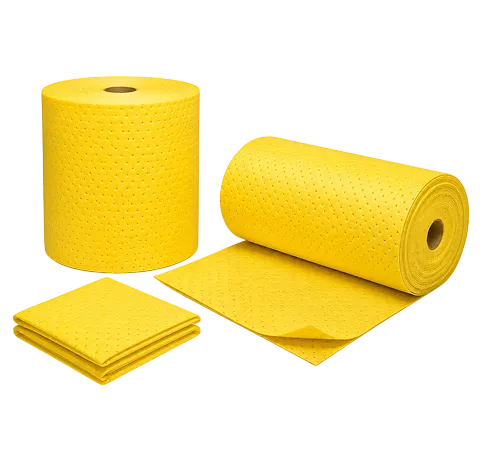
Chemical spills in industrial environments demand more than a standard absorbent response. They demand speed, capacity, coverage, and a product that can be deployed quickly across the exact footprint of the incident
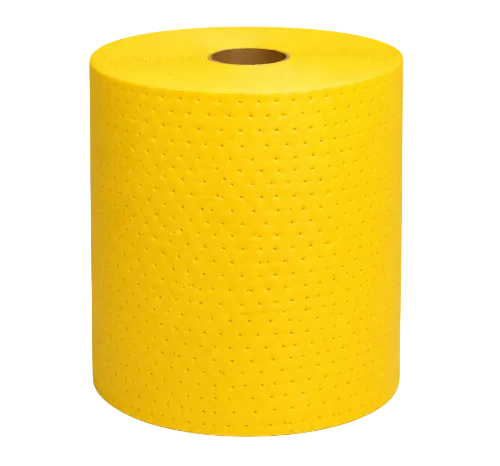
The SL-CR1 is our largest and most powerful chemical absorbent roll — a heavy-weight, maximum-capacity sorbent solution engineered for serious chemical spill response and proactive industrial spill prevention.
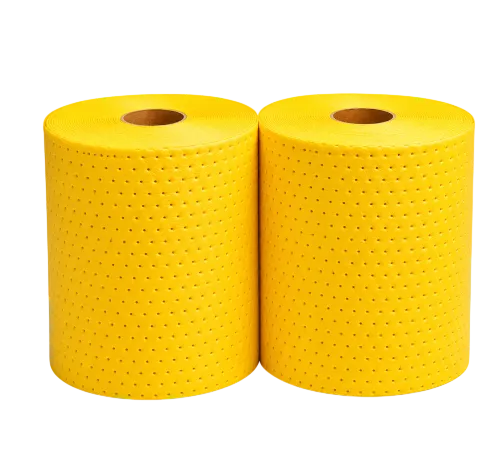
The SL-CR2 is a heavy-weight, high-capacity chemical absorbent roll delivering the same exceptional 192-litre absorption performance as the SL-CR1
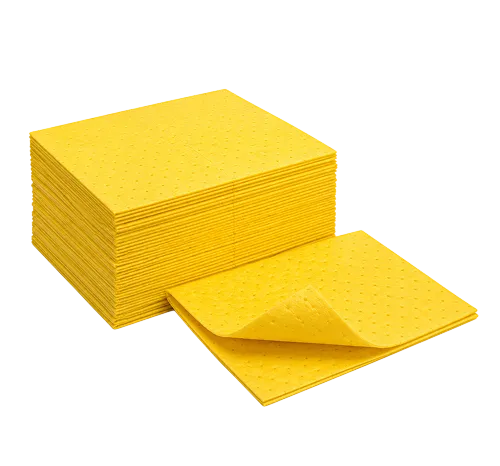
The SL-C200 is our most popular chemical absorbent pad — a light weight, high-value, daily-use sorbent solution trusted across industrial facilities, laboratories.
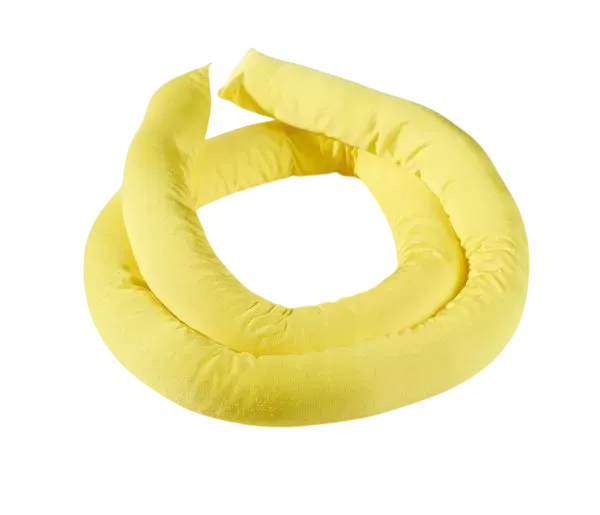
ESNICO’s chemical absorbent socks are your first line of defense when a hazardous spill occurs. These flexible, fast-acting tools are designed to wrap around leaks and contain aggressive liquids before they can spread.
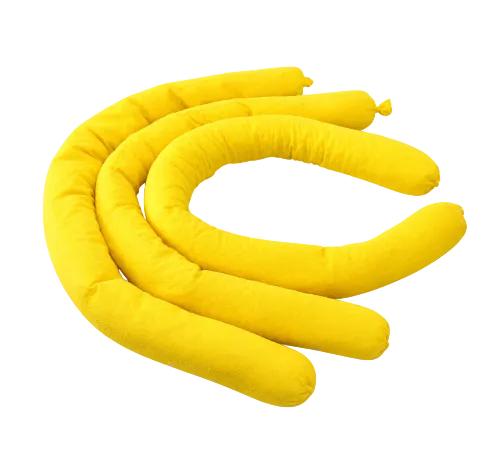
The SL-CS1 Chemical Absorbent Sock is a flexible, heavy-duty spill containment tool built to stop hazardous liquids right at the source.
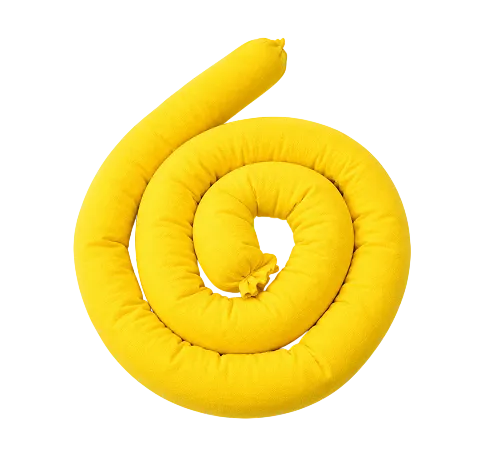
The SL-CS2 is a heavy-duty, extended-length chemical absorbent sock built for large spill perimeters and high-volume fluid containment.









Chemical leaks often pool in hard-to-reach spaces. While flat pads work well on open floors, Chemical Absorbent Pillows are flexible and compress easily into confined areas, molding around irregular pipework fittings, collecting leaks beneath heavy machinery, or sitting directly inside deep drip trays.
The entire range features a treated hydrophilic absorbent core capable of absorbing a wide spectrum of liquids. This includes aggressive acids, alkaline solutions, acetate, chlorinated solvents, benzene, toluene, oils, water, and general hazardous chemicals found in industrial environments.
Yellow is the universally recognized color code for hazardous chemical absorbents. This distinct, high-visibility coloring ensures your response teams can instantly identify and select the correct safety item from a crowded supply locker during time-critical chemical spill incidents.
To prevent tearing or leaks during deployment, each cushion is built with a tough spunbond polypropylene outer layer and finished with a stitched perimeter seam. This heavy-duty design ensures the entire unit remains fully intact and physically stable from first chemical contact to final disposal.
The compact SL-CC1 (25x40cm) is engineered for targeted minor leaks and holds 4.5 liters per kilogram. The heavy-duty SL-CC2 (40x40cm) is built for serious pooling and holds an impressive 15 liters per kilogram, making it ideal for high-flow leaks and industrial IBC containment.
Yes. As long as they are stored in a cool, dry location away from moisture and direct sunlight, they will retain their full structural integrity and absorbency performance indefinitely. Keep them in their original sealed packaging until your team requires them.
Saturated Chemical Absorbent Pillows must be managed according to the regulations governing the specific liquid absorbed. Saturated units containing hazardous substances must never enter general waste streams; they must be processed via your site's standard hazardous waste protocols.
Don’t hesitate to contact us for more information about company or service