- Al Sajaa Industrial - Emirates Industrial City – Sharjah

Most lithium-ion packs charge when nobody is watching. Overnight, between shifts, on a bench in the corner of the workshop. A lithium-ion battery storage cabinet earns its place in exactly those hours. The SSC045TWA is a lithium battery storage cabinet built for that window, combining charging, monitoring, and emergency protection inside one powder-coated steel enclosure. It handles the charging cycle and temporary storage between shifts, which is where most UAE sites currently have packs sitting loose on a shelf.
Temperature monitoring runs continuously and a smoke detector covers the interior. If either picks up trouble, an audible and visual alarm fires and the emergency stop cuts charging. Multiple sockets let a team charge several packs at once rather than queuing them, and the shelves adjust to whatever mix of pack sizes a workshop actually runs. Doors lock, so nobody borrows a charging bay without asking. Dual side vents move heat out during the cycle.
Power tool packs, diagnostic equipment, and cordless kit. Most of it charges overnight when nobody is on the floor to notice a problem. That is the scenario this cabinet is built around.
Scanners, handheld terminals, and pallet truck packs. A warehouse charges a lot of small batteries and usually charges them in one place. Multiple sockets keep that consolidated inside a single monitored battery storage cabinet instead of spread across an unmonitored bench.
Laboratories run instruments on lithium-ion packs and often store them near sensitive equipment or reagents. Locked doors control who has access, and the smoke detection stage gives an early signal before anything reaches the wider room.
Production lines running battery-powered tooling need packs ready at shift changeover. Adjustable shelving takes mixed pack sizes without a separate cabinet for each, and centralized power control means charging is switched from one point rather than at each socket.
Where several teams share a site, charging bays get used by whoever gets there first. A lockable battery safety cabinet turns that into a controlled resource, and keeps batteries in one known place rather than scattered around a building.
Batteries do not stop being a hazard once they are charged. The cabinet is designed for temporary storage as well as charging, so packs stay inside the enclosure between cycles instead of returning to an open shelf.
No cabinet carries a blanket UAE approval. Facilities are assessed on site-specific fire strategy and UAE Civil Defence requirements. Siting matters as much as the cabinet itself: clearance at the vents, distance from egress routes, and where the enclosure sits relative to your existing suppression coverage. Confirm placement with your safety officer before installation.
| Specification | Detail |
|---|---|
| Model | SSC045TWA |
| Product | Smart Lithium Battery Charging Safety Cabinet |
| Material | Powder-coated steel |
| Door type | Double door, manual |
| Ventilation | Dual side vents |
| Charging voltage / frequency | 230 V AC / 50 Hz (customizable) |
| Charging sockets | Multiple (Customizable) |
| Temperature monitoring | Standard |
| Smoke detection | Standard |
| Audible and visual alarm | Standard |
| Emergency stop | Standard |
| External dimension (L x W x H) | 109 x 46 x 189 cm |
Position the lithium battery storage cabinet on level ground within reach of a 230 V AC, 50 Hz supply. Voltage and frequency can be customized at the order stage, so confirm the site supply before placing the order. Leave clearance at both sides so the dual side vents are not obstructed.
Temperature monitoring, smoke detection, alarm, and emergency stop are supplied as standard on this model. These are supporting controls. They do not replace a site fire risk assessment, and the cabinet should be sited according to your facility fire strategy and local Civil Defence requirements. Always follow the battery manufacturer’s instructions for charging current, charging duration, and safe pack condition.
Load packs onto the adjustable shelves so that airflow around each unit is not blocked. Do not charge a battery that is visibly swollen, damaged, or has been exposed to water or impact. Batteries in that condition should be isolated and handled under your site waste and hazardous materials procedure.
Keep the doors locked when the cabinet is unattended. Key holding should sit with a named person or the shift supervisor rather than being left in the lock.
Test the audible and visual alarm and the emergency stop on a set schedule agreed with your safety team. Keep the interior clear of packaging, cloth, and other combustible material. Check that the vents remain clear and that the smoke detector has not been obstructed by stored items.
Ordered this for our lab after our safety officer flagged battery charging as a gap in the risk assessment. What sold us was the smoke detection and the emergency stop, not just the storage. The 230V supply matched our setup with no modification needed. Delivery to Dubai took a week.
Deepa KrishnanSolid steel body, no flex in the doors, and the shelves move properly instead of being adjustable in theory only. We run mixed pack sizes across three departments, and it takes all of them. The only note is that it is tall at 189cm, so measure your bay before ordering. Ours barely cleared a low beam.
Mohammed IdrisOur warehouse charges around thirty scanner batteries a night. Having them in one monitored battery safety cabinet instead of spread across two benches has made the overnight shift far less of a worry. The centralized power control means one switch at the end of the day rather than walking around unplugging things.
Sarah MathewBought two for a Sharjah production site. Straightforward dealing with the Spectrum Lines team, and they confirmed the socket configuration before we placed the order, which we appreciated.
Anwar Hussain
The ESNICO Safety Storage Cabinet is a professional-grade chemical storage solution designed to protect people, property,
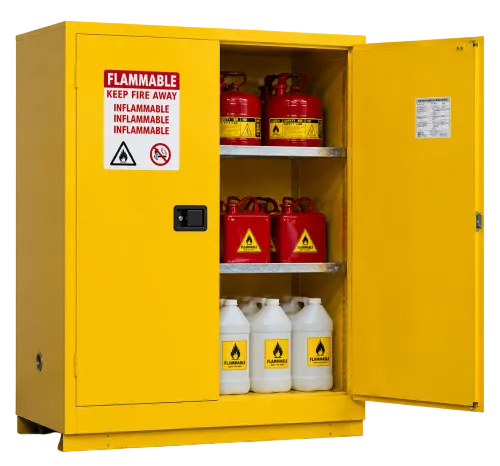
The ESNICO Flammable Storage Cabinet is engineered for the safe and compliant storage of flammable liquids in industrial and commercial environments.
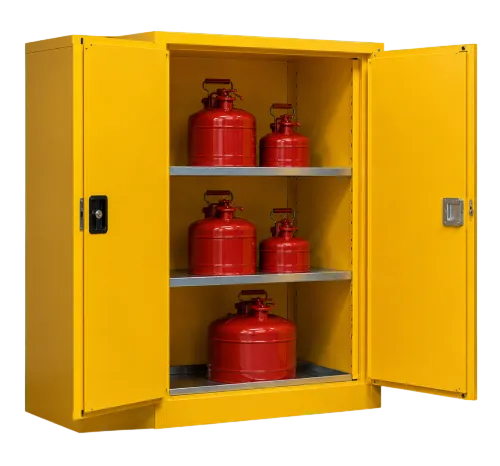
The ESNICO Combustible Storage Cabinet is purpose-built for the safe and compliant storage of combustible liquids in demanding industrial environments.

The SSC045CB is a professional-grade corrosive storage cabinet engineered to provide a safe, compliant,

The ESNICO Drum Storage Cabinet range is purpose-engineered for the safe, compliant, and efficient storage of 200-litre drums containing flammable or hazardous liquids.

The ESNICO PPE045Y is a purpose-built, heavy-duty storage cabinet designed exclusively for the organised, protected, and immediately accessible storage of personal protective equipment.
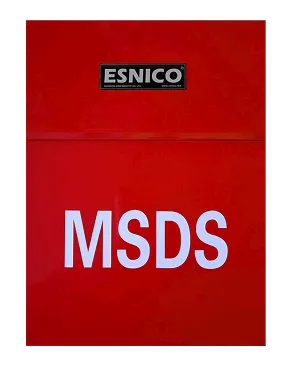
A robust and long-lasting MSDS box that makes safety information about chemicals or hazardous materials used in industrial settings easily accessible.
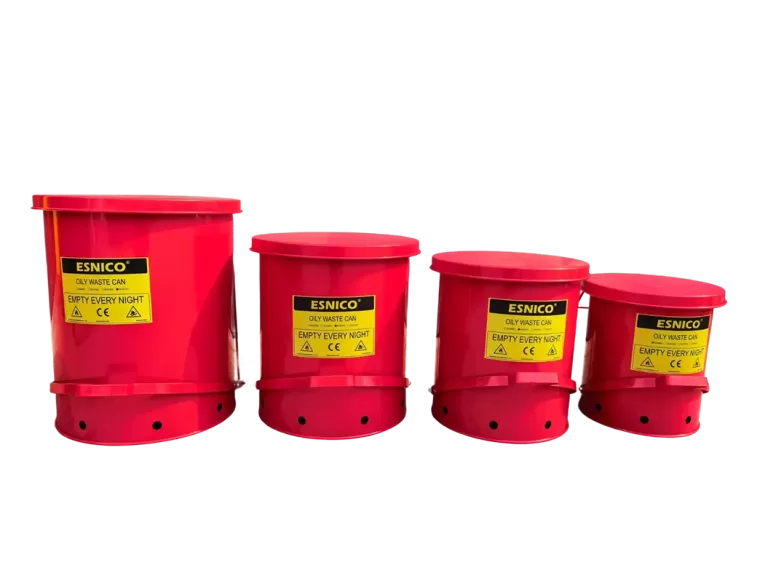
Rags wipes and paint rags soaked in oil grease and solvents can all be safely collected in a 6- gallon oily waste can.
The 10 Gallon Oily Waste can is an effective way to store flammable industrial waste while providing compact, efficient storage.
The 14-gallon oily waste can is designed to hold larger quantities of combustible waste materials. For industrial settings that need a lot of waste collection, this is a dependable safety solution.
The 21-gallon oily waste can is a large-volume safety container that has been made to be used in industrial applications that are tough.

Equipped with neutralisers and absorbents these kits provide a safe and efficient solution for spill containment and cleanup.

Tailored for aquatic environments this kit can efficiently contain and clean up spills in rivers, lakes, and oceans. Floating booms, absorbent materials, and disposal bags are some of the essentials in this kit.

This is an ideal choice for facilities handling multiple substances as they can clean up different types of spills, including oils, chemicals, and other liquids.
It is an enclosure built specifically for charging lithium-ion batteries and storing them temporarily between cycles. Not a general chemical or flammable liquid cabinet. The distinction matters because lithium batteries fail through thermal runaway rather than vapour ignition, so the controls are different.
Yes. The cabinet has multiple charging sockets and centralized power control, so a team can run several packs in one cycle rather than charging them one after another. Customize your socket count with our sales team.
Temperature monitoring runs continuously, and a smoke detector covers the interior. If either triggers, an audible and visual alarm sounds. The emergency stop lets a person on site cut charging immediately. These are early-warning and shutdown controls, not a fire suppression system. The cabinet should sit within your wider site fire plan.
109 x 46 x 189 cm, length by width by height.
Yes. The standard configuration is 230 V AC at 50 Hz, which matches the UAE supply. Other voltages and frequencies can be specified at the order stage if the cabinet is going to a site with a different supply.
Yes. In shared workshops and multi-team sites this is usually the deciding feature for a lithium battery cabinet, because it stops batteries and charging bays being used without oversight.
The manufacturer's datasheet carries OSHA and NFPA marks. Compliance in practice depends on how and where the cabinet is installed and on the standards your facility is assessed against. Speak to your safety officer or civil defence consultant about your specific installation before relying on the cabinet for a compliance requirement.










Don’t hesitate to contact us for more information about company or service
We were charging tool packs on an open shelf in the workshop, which nobody was comfortable with, but nobody had a fix for either. This lithium battery storage cabinet solved it in an afternoon. Doors lock, and the alarm test we ran on day one worked exactly as described. Good buy.
Rashid Al Falasi