
Decoding UAE’s Safety Regulations: Lockout Tagout Requirements
One mistake. That’s all it takes when a machine unexpectedly roars to life while someone’s hands are still inside. In the UAE’s fast-paced industrial sector, meeting lockout tagout requirements isn’t just a “good idea” it’s a legal mandate designed to stop preventable tragedies. If you’ve been treating energy isolation as a suggestion rather than a strict protocol, you’re risking more than just a fine.
Table Of Contents:
What Are the Core Lockout Tagout Requirements?
The short answer? You must physically isolate every energy source before maintenance begins.
In the UAE, authorities like the ministry of human resources and emiratisation (MoHRE) and Abu Dhabi’s OSHAD framework make it clear: employers must provide a safe work environment. This means implementing a “zero energy state.” You can’t just flip a switch and hope for the best. You need to verify that all electrical, hydraulic, and pneumatic power is dead and locked away.
Meeting these requirements involves three non-negotiable steps:
- Written Procedures: You need a step-by-step guide for every machine.
- Hardware: You must provide high-quality locks, hasps, and tags.
- Training: Your team needs to know the difference between "authorized" and "affected" staff.
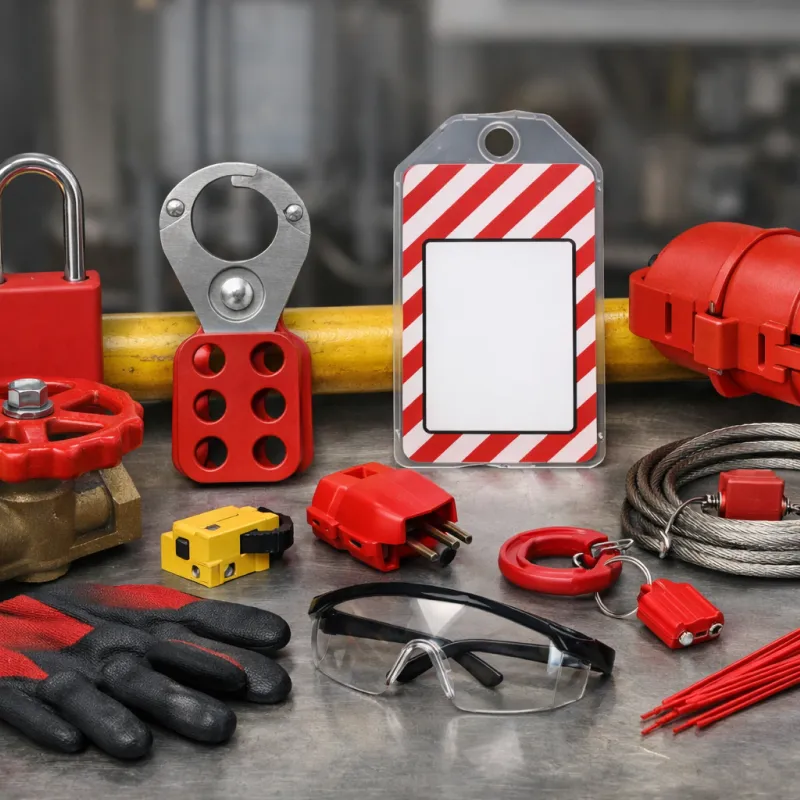
Is Your LOTO Program Compliant or Just "Okay"?
A common myth is that a simple padlock is enough. It isn’t. According to international standards like ISO 45001 (widely adopted in Dubai and Abu Dhabi), your equipment must be “singularly keyed.” This means only the person performing the work has the key to their lock.
If multiple people are working on one machine, you use a hasp. This allows everyone to attach their own lock. The machine stays dead until the last person removes their lock. It’s a simple system that saves lives.
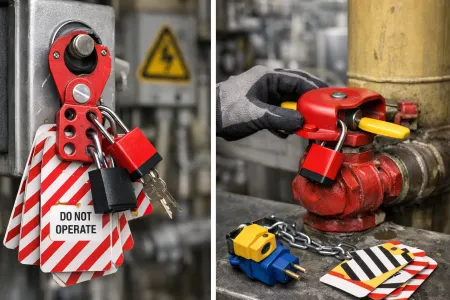
Why Proper Tagging Matters
Tagging is the “voice” of your safety system. While the lock provides the physical barrier, the tag provides the “who, why, and when.” Our specialized lockout tags are built for the UAE climate, resistant to heat, oil, and chemicals, ensuring the warning stays legible even in the toughest refinery or construction site conditions.
Final Thoughts
Are your current LOTO procedures a checkbox or a culture? Understand the lockout tagout requirements; if you aren’t sure, it’s time to audit your gear and your training. Protecting your team from hazardous energy is the single best investment you’ll make this year.
FAQ
Lockout’ is the physical part using a lock to hold an energy-isolating device in a safe position. Tagout’ is the communication part using a label to warn others not to touch the equipment. You almost always need both to be compliant in the UAE.
This is the person who actually applies the locks and performs the maintenance. They must have specific training on how to isolate the energy sources for that specific machine.
Not necessarily, but you need a system where one key only opens one lock. "Master keyed" systems are sometimes used for supervisors, but for the actual work, the person in danger must have exclusive control over their lock.
Yes. If you have machinery or equipment that could hurt someone if it starts up unexpectedly, you are legally required to have an energy control program, regardless of your company size.