
10 Things to Look for in a Safety Equipment Supplier
Table Of Contents:
How Can You Verify the Certifications of a Safety Equipment Supplier?
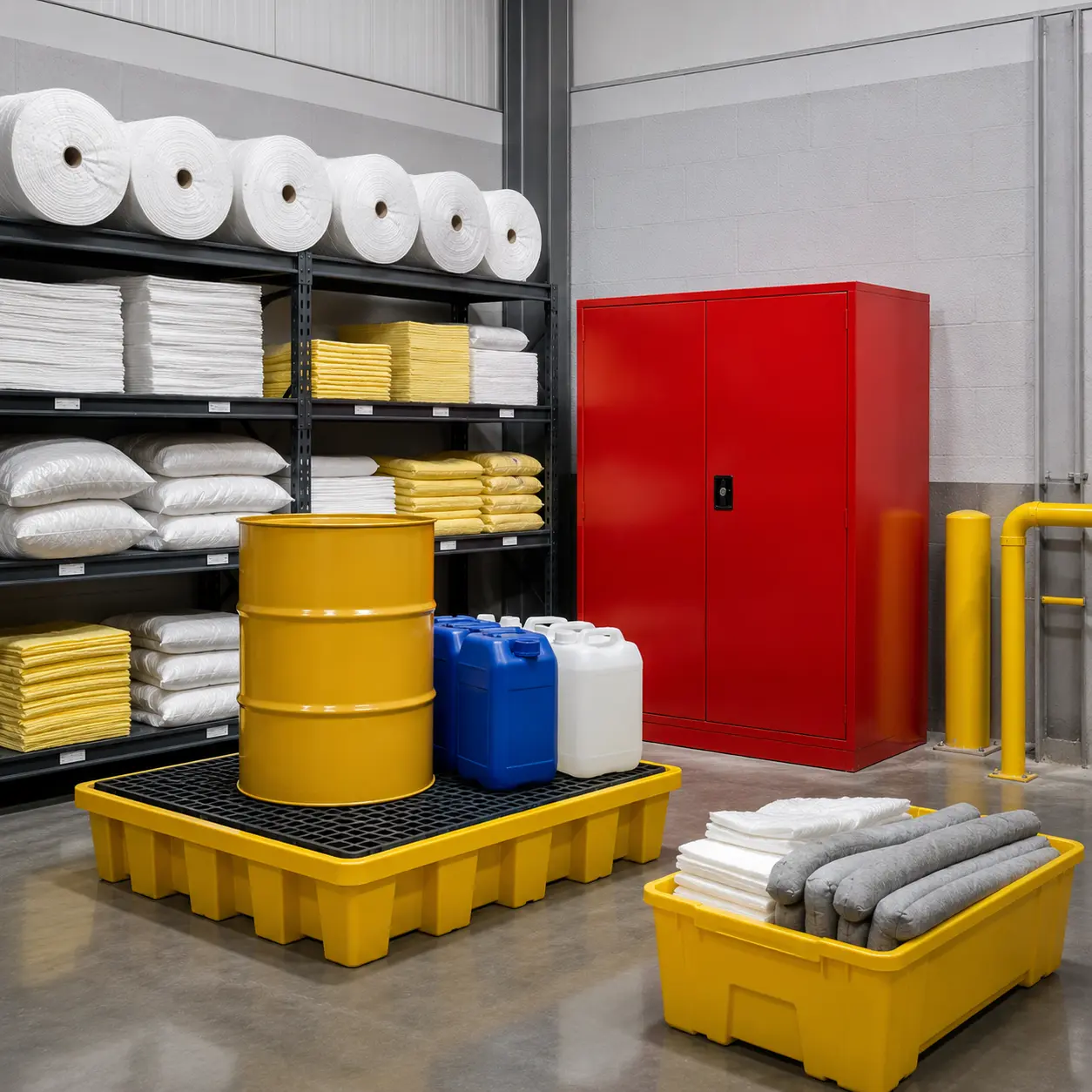
Ask specifically which standard applies to which product line. A spill pallet rated for a specific sump capacity needs documentation showing how that number was verified, not just a spec sheet written by the sales team.
Product Range Backed by Real Manufacturing Partners
Manufacturing partnerships matter here too. Suppliers who work directly with manufacturers across Europe, Asia, and the Middle East tend to offer more consistent quality control than those reselling whatever inventory happens to be available that month.
Inventory Depth and How Fast They Can Move
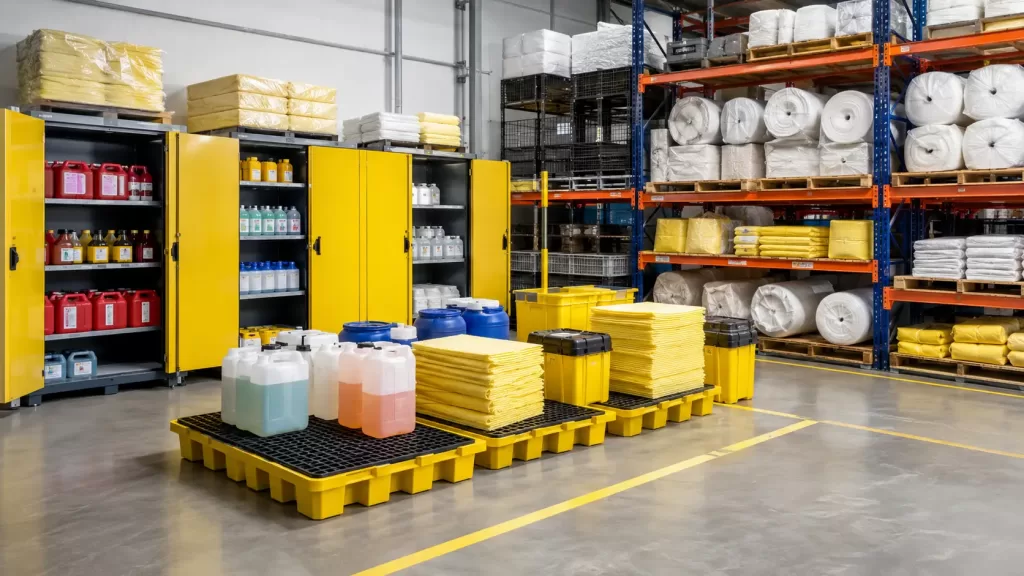
Spills don’t wait for restocking cycles. Ask any potential supplier a direct question: if you needed 50 absorbent socks and two safety cabinets by Thursday, could they deliver? A supplier with genuine warehouse depth will answer that without hesitation. One relying on drop-shipping from overseas usually hedges.
This also applies to absorbent granules and chemical absorbent rolls, since these move fast during active cleanup and facilities often burn through stock quicker than expected during an incident.
Technical Knowledge, Not Just Order Taking
The person answering your call should know the difference between an oil absorbent and a universal absorbent and why using the wrong one on a chemical spill can be a compliance problem rather than just an inconvenience. Oil absorbents work well in marine and industrial settings for fuel and lubricant cleanup, but chemical spills involving substances like sodium hydroxide need absorbents rated for that specific chemistry.
If a supplier’s team can walk you through which spill kit configuration suits your facility type, whether it’s a workshop, a warehouse, or a marine dock, that’s a sign they’re solving problems rather than just fulfilling orders.
Documentation and Regulatory Alignment
Any safety product provider worth working with will provide clear documentation alongside their products. This includes material composition details, absorbency ratings, and guidance on regulatory alignment for your sector. For industries handling hazardous materials, having this paperwork ready during an inspection or audit matters as much as having the equipment itself.
Ask whether the supplier maintains records of what they’ve supplied to your facility over time. This becomes useful during compliance reviews, particularly when regulators ask for a history of your spill response readiness rather than just a snapshot of current stock.
According to OSHA’s hazardous materials guidance, workplaces handling hazardous substances are expected to maintain both the right containment equipment and documented response procedures, not one without the other.
Final Thoughts
FAQ
Because a single spill event usually needs more than one tool. Absorbent pads handle the liquid, socks contain the spread, gloves and goggles protect the person cleaning it up, and waste bags handle disposal without contaminating the rest of the site.
Yes. Cabinets built for flammable liquids differ from those designed for acid or corrosive storage. Matching the cabinet type to what's actually stored inside is part of basic compliance, not an optional upgrade.