
5 Ways to Improve Workplace Safety in Chemical Transfer
Every drum that gets tipped, decanted, or wheeled across a warehouse floor in an industrial zone carries a small window of risk. That window opens during transfer, not storage, in the few minutes when a container is unsealed, moving, or connected to a pump. Facilities that improve workplace safety at this exact point cut down on slips, contamination, and costly cleanup before any of it starts.
Chemical transfer looks routine until it isn’t. A cracked bung, an overfilled IBC, or a drum set down on bare concrete can turn a five-minute task into a hazardous materials incident. Most of that risk can be engineered out with the right containment setup and a few habits that don’t take long to build. Here are five practical steps worth putting in place.
Table Of Contents:
How Spill Pallets Improve Workplace Safety During Transfer?
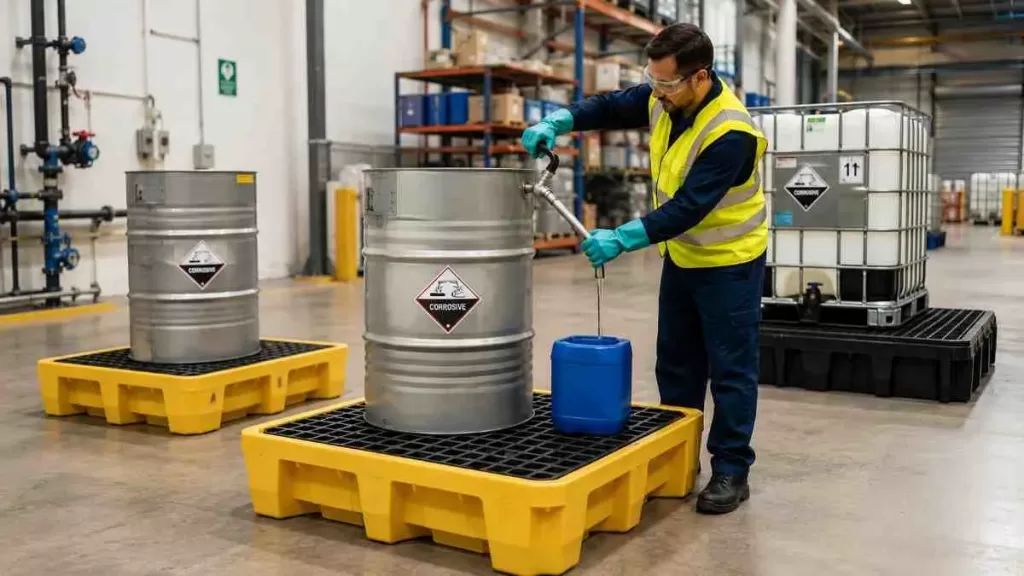
A drum spill pallet does one job well. It sits under the drum during transfer and catches whatever escapes before it reaches the floor. Polythene 1-drum and 2-drum pallets are built for single-drum decanting, holding drums with a capacity between 50 and 220 litres on a surface that resists chemicals rather than porous concrete. For teams handling several drums at once, 4-drum configurations extend that same containment across the whole transfer line without changing the workflow.
Match Pallet Capacity to the Drum Count and Load
Undersized containment is a common and avoidable mistake. A 2-drum spill pallet carries a 250-litre sump and a 680-kilogram load capacity, suited to fully loaded steel drums parked for extended periods. A 4-drum pallet, by contrast, supports four drums and a UDL load capacity of 2,722 kilograms while keeping that same 250-litre sump. The choice isn’t about picking the biggest option on the shelf. It comes down to matching the pallet’s rated load and sump size to how many drums actually sit at that station on a busy day.
Size Containment for the Full Transfer Volume
Transfer involving intermediate bulk containers needs a different scale of containment entirely. A double IBC spill pallet holds a 1,150-litre sump and is built for two 1,000-litre IBCs with removable grids, while a single IBC pallet carries a 365-gallon sump rated for chemical compatibility across storage, transport, and dispensing. Secondary containment sized to at least the volume of the largest connected vessel is a standard expectation across hazardous materials handling. Getting this number wrong on paper is usually where a facility discovers the gap, and by then the spill has already happened.
Keep a Chemical-Specific Spill Kit Within Reach
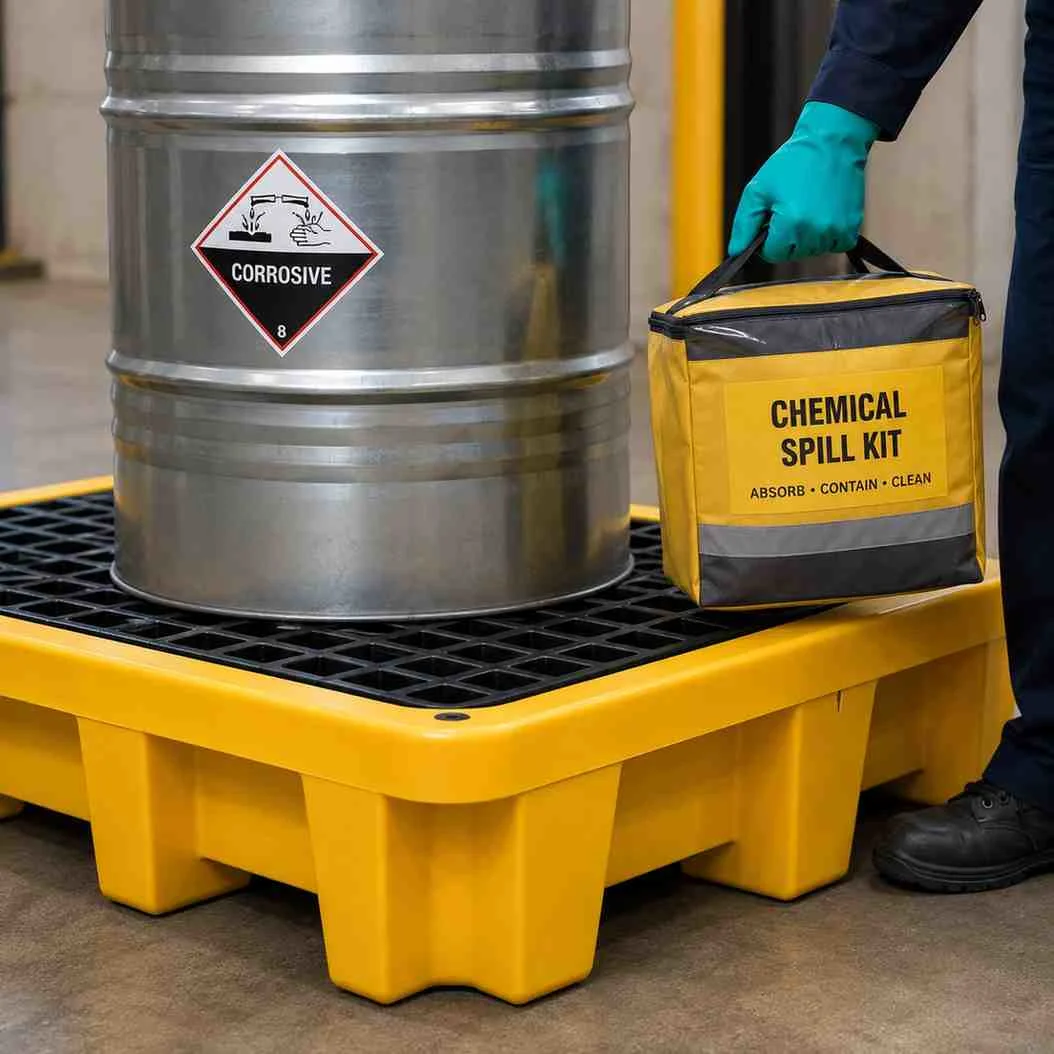
A spill pallet manages the predictable leak. A spill kit manages the one nobody planned for. Chemical spill kits carry neutralizing agents and absorbents suited to strong acids and other hazardous liquids, a different formulation from what sits inside an oil-only kit. Oil spill kits soak up fuels and oils without absorbing water, which makes them the wrong pick for a chemical decanting station and the right one for a loading dock with hydraulic equipment. Universal kits sit in between, built for facilities juggling several liquid types under one roof.
Build a Simple, Repeatable Spill Response Routine
Equipment only helps if people know how to reach for it under pressure. A workable routine starts with PPE, gloves, and safety glasses on before anything else happens. Dikes or booms go down first to stop the spread, followed by absorbent pads, socks, or pillows to pull up the liquid. Once it’s soaked up, the used materials go straight into disposal bags instead of sitting out on the floor. None of these steps take long once a team has practiced them, and that practice is what separates a contained five-minute spill from a shift-long shutdown.
Final Thoughts
Improve workplace safety rarely comes down to one big fix. It’s the pallet under the drum, the sump sized for the IBC, and the right kit sitting two steps away instead of two floors away. Building those pieces into the daily routine is what actually moves the needle on incident rates. Where does your current transfer setup have the biggest gap right now?
FAQ
It depends on what's connected to it. A 2-drum pallet carries a 250-litre sump, while a double IBC pallet holds 1,150 litres for two 1,000-litre containers. Match the sump to the largest vessel in the line, not just the smallest drum you're used to handling.
No, and that's worth knowing before an incident happens. Chemical spill kits use neutralizing agents built for hazardous liquids, while oil-only kits skip water absorption entirely. Universal kits cover general use, but a genuine chemical spill still calls for the chemical-specific kit.
Transfer is actually the riskier moment. Bungs get opened, pumps get connected, and drums get tilted, all of which raise the odds of a drip reaching the floor. Keeping the pallet under the drum through the whole transfer, not just storage, closes that gap.
Skipping gloves and safety glasses turns a contained spill into a personal exposure risk. Most spill kits include both for a reason. Suiting up first, before touching booms or absorbents, is the step that gets rushed most often under time pressure.
Better depends on the station's actual traffic. A 4-drum pallet supports more weight and more drums at once, suited to lines moving several containers a day. A single-drum station doesn't need that scale, and oversized containment just eats floor space without adding safety value.