
How to Use Absorbent Spill Socks for Leak Control
A drum seam starts weeping at the end of a shift, and the liquid goes looking for every low spot on the floor. Absorbent spill socks give you a way to hold that liquid in place and soak it up before it becomes a slip hazard, a fire risk, or a pollution problem. Handled in the right order, these socks turn a small leak into a small job. Here is that order, from protective gear to disposal, plus the choices you need to make before you start.
Table Of Contents:
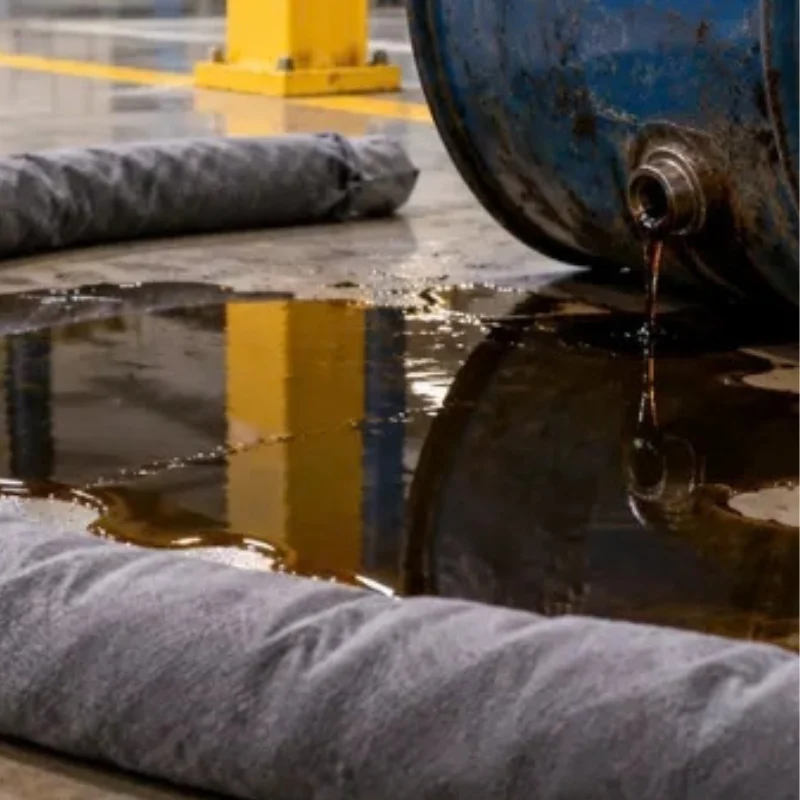
What Do Spill Socks Actually Do?
A spill sock is a tube-shaped absorbent that acts as a barrier. It keeps liquid from creeping outward while taking some of it in. It sits in the same family as absorbent pads, pillows, and rolls, which behave like big sponges inside a typical spill kit.
Many of these absorbents are made of polypropylene and can hold 10 to 20 times their own weight. You will find them in factories and in marine settings such as harbors, rivers, and ponds.
Spilled hazardous liquids can hurt people and the environment. They can leave floors slippery, start fires, or pollute water. That is why a fast response, with the right material already within reach, counts for so much.
Match the Sock to the Liquid
Spill kits come in different types because spills differ. Before you open anything, work out what is on the floor.
Oil-only absorbents soak up oils and fuels but leave water alone, which suits oil on water or wet ground. Universal absorbents handle water, coolants, and some oils or chemicals, so they fit general use. Chemical absorbents are made for strong acids and other hazardous liquids, and the range covers chemicals like citric acid, hydrofluoric acid, and sodium hydroxide.
A chemical spill kit does not cover every spill. It belongs to hazardous chemical spills only. If you cannot identify the liquid, stop and follow your workplace rules. Picking the right absorbent spill socks at this stage saves you from doing the job twice.
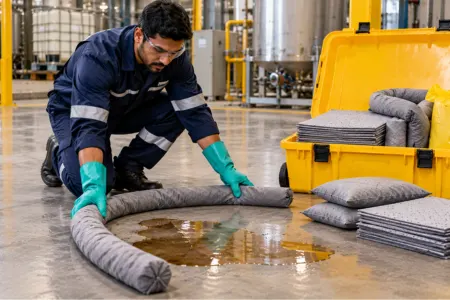
Step-by-Step Guide to Using Absorbent Spill Socks
Five moves, in this order.
Put on Protective Gear
Gloves and safety glasses come with the kit for a reason. Gloves keep harmful chemicals off your skin, and the glasses protect your eyes from splashes. Put both on before you touch the socks or anything near the liquid.
Stop the Leak At Its Source
If you can stop the spill, do it now. Less liquid on the floor means fewer socks, pads, and bags later. If the source cannot be stopped, go straight to the next step.
Set the Barrier
Lay the sock across the path the liquid is travelling, or around the edge of the pool, so it does the job a dike or boom would. This is containment. You are not cleaning yet, only stopping the spill from growing. Left alone, oil in particular can mark floors and drift toward water sources.
Soak Up What Remains
With the edges held, put pads, pillows, or granular absorbents onto the liquid itself and let them draw it in. Work until the liquid is gone, not just until the floor looks acceptable from a distance.
Bag Everything Used
Every soaked item, including the sock, goes into the disposal bags supplied in the kit. Do not leave dirty material lying around to leak a second time. What happens to the bag afterward depends on your workplace rules, so follow them.
Where These Steps Tend to Go Wrong
Most failures trace back to a mismatch. A kit made for oil gets used on a chemical, or a chemical kit gets treated as the answer to everything. Both lead to a messier floor and more risk.
The second habit is skipping gloves and glasses because the spill looks minor. Small spills still splash. The third is letting soaked material sit in a corner instead of bagging it straight away.
Final Thoughts
A leak never picks a convenient moment, so the sequence matters more than the gear: protect yourself, stop the source, set the barrier, soak, and bag. If your site keeps socks and pads on hand, does everyone on shift know which liquid each one is meant for? A quick walk through your own spill points this week would answer that. Published by Spectrum Lines GCC, an industrial safety supplier based in Sharjah.
FAQ
It's a tube-shaped absorbent that works like a barrier. You lay it where liquid is spreading, and it holds the edge while taking some in. Pads, pillows, or granular absorbents then deal with whatever is left inside that line.
Not by default. Oil-only types take up oils and fuels but ignore water. Chemical types are built for hazardous liquids like strong acids. Universal types cover water, coolants, and some oils or chemicals. Match first, and if you're unsure, follow your workplace rules.
Gloves and safety glasses, at minimum. Both come in a typical spill kit. The gloves keep harmful chemicals off your skin, and the glasses cover splashes. Put them on before you go near the liquid.
Into the disposal bag with everything else that got soaked. Don't leave it sitting around to drip. After that, disposal depends on your workplace rules, so stick to those.
Many polypropylene absorbents, socks included, can take up 10 to 20 times their own weight. Real capacity varies by size and type, so check the label on whatever you're using.