
How to Clean Up Body Fluids Safely at Home
Nobody plans for it. A nosebleed that gets out of hand. A sick child. An elderly parent who had an accident. Suddenly you are kneeling on the floor, wondering if what you are doing is actually safe or just making things worse. Here is the truth: most people clean up body fluids the wrong way. Not because they are careless, but because nobody ever actually taught them the right steps.
This guide fixes that. You will know exactly what to do, in what order, and why each step matters for your health and everyone else in your home.
Table Of Contents:
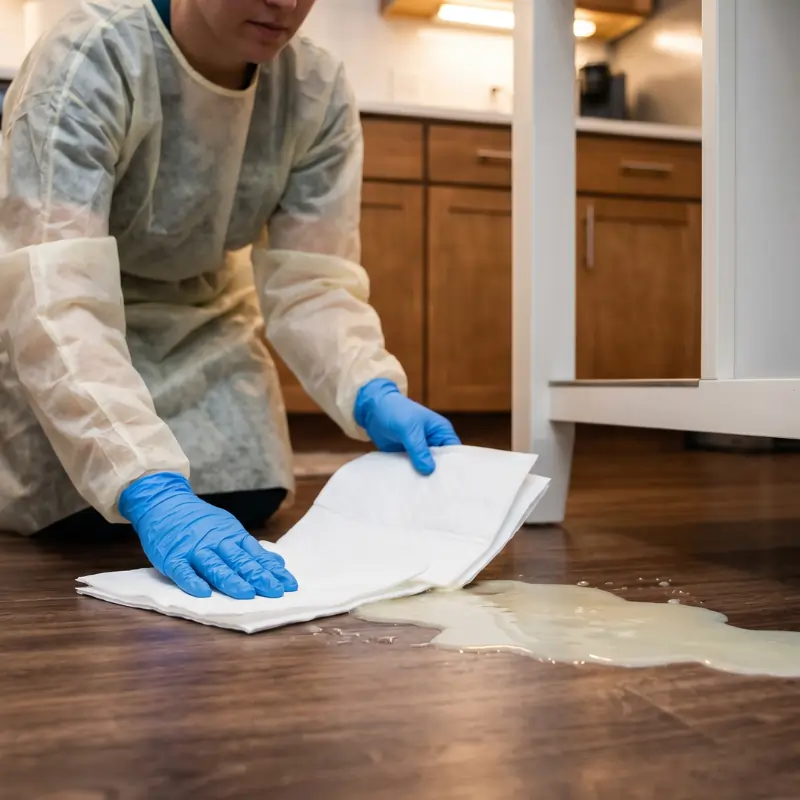
Why Body Fluid Cleanup Is a Health Risk, Not Just a Mess?
Blood, vomit, urine, and other bodily fluids can carry pathogens. According to the CDC, bloodborne pathogens like hepatitis B, hepatitis C, and HIV can survive outside the body for hours to days under the right conditions. That is not meant to scare you. It is meant to make sure you treat the cleanup with the seriousness it deserves.
The floor might look clean after you wipe it. But “looks clean” and “is safe” are two completely unique things when infectious material is involved.
Step-by-Step: How to Clean Up Body Fluids the Right Way
Step 1: Stop and Put On Personal Protective Equipment First
Before you touch anything, protect yourself. At minimum, you need disposable gloves. Ideally, you want a face mask and a disposable apron or gown, especially if there is a significant volume of fluid or if the person involved has a known illness.
This is not overkill. PPE is the first barrier between you and any pathogen in that fluid. Skip it, and everything else you do is undermined from the start.
Step 2: Contain the Spill Before You Clean It
Do not spread the fluid further. If you have paper towels or disposable absorbent material, place them around the edges of the spill first to stop it from spreading. Work from the outside of the spill inward. This is how biohazard response teams approach a scene, and it works just as well at home.
For larger spills, an absorbent powder can be helpful. Products designed for this purpose can solidify liquids quickly, making them safer and easier to lift without smearing.
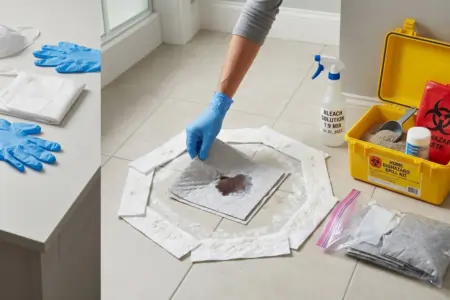
Step 3: Remove the Bulk of the Fluid
Once contained, use disposable absorbent pads, paper towels, or cloths to pick up the bulk of the material. Do this gently and without scrubbing. Scrubbing spreads the contamination and can aerosolize tiny particles you really do not want to inhale.
Place everything you used directly into a sealable plastic bag as you go. Do not set used materials down on another surface.
Step 4: Disinfect the Area Properly
This is the step most people get wrong. Cleaning removes visible material. Disinfecting kills pathogens. You need both, in that order.
Use a bleach-based disinfectant or an EPA-registered hospital-grade disinfectant. A common home ratio is 1 part bleach to 9 parts water, mixed fresh each time you use it. Apply it to the area and let it sit for at least 10 minutes before wiping it away.
Do not use general-purpose household sprays as a substitute. Most are not formulated to kill bloodborne pathogens.
Step 5: Dispose of Waste Correctly
Everything used in the cleanup, including gloves, absorbent materials, and disposable clothing, goes into a sealable bag. Ideally a second bag over the first. This is what professionals call double-bagging, and it keeps the waste contained during transport to the bin.
Check your local authority’s guidelines on infectious waste disposal. In most household situations, double-bagged materials go into your general waste bin, but if the volume is large or the person involved has a serious infectious condition, contact your local health authority for guidance.
Step 6: Wash Your Hands Thoroughly
Even after removing gloves, wash your hands with soap and water for at least 20 seconds. Gloves are not infallible. Washing is always the final step.
What Is a Biohazard Spill Kit and Do You Need One at Home?
A biohazard spill kit puts everything you need in one place, ready to go when something happens. A standard kit typically includes disposable gloves, a face mask, absorbent granules or powder, a scraper or scoop, a biohazard waste bag, a disinfectant solution or wipes, and sometimes a disposable apron.
Spectrum Lines supplies biohazard spill kits designed for workplaces across the UAE, but the same principle applies at home, particularly if you are caring for someone who is unwell, elderly, or immunocompromised. Having a kit ready means you are not scrambling for materials when something happens.
Preparation is not pessimistic. It is just sensible.
Surfaces That Need Special Attention
Carpet and fabric are harder to disinfect than hard floors. After removing as much fluid as possible, apply a disinfectant solution rated for porous surfaces, blot rather than scrub, and allow it to dry thoroughly. In some cases, the safest option is to remove and dispose of the affected material entirely.
Mattresses and upholstered furniture present a similar challenge. Enzymatic cleaners can help break down organic material, followed by a suitable disinfectant. If the contamination is significant, professional cleaning may be worth considering.
Final Thoughts
Understanding how to clean up body fluids safely at home is not complicated once you know the correct sequence. Protect yourself first, contain before you clean, disinfect properly, dispose of everything correctly, and wash your hands. That is the whole framework.
The most common mistake is rushing through the process or skipping PPE because it feels excessive for a home situation. It is not. Pathogens do not distinguish between a hospital room and your bathroom floor.
If you are regularly caring for someone at home and want to be genuinely prepared, having a proper biohazard spill kit on hand makes the whole process faster and safer. What does your current home setup look like for handling unexpected spills?
FAQ
Yes, every time. Even a small amount of blood can carry pathogens like Hepatitis B, which is far more resilient outside the body than most people realise. Gloves take five seconds to put on. Worth it.
Most standard sprays are not formulated to kill bloodborne pathogens. You want a bleach-based solution or an EPA-registered disinfectant specifically rated for biohazardous material. Check the label before you assume it is doing the job.
Blot, do not scrub. Remove as much material as possible with absorbent pads, apply a disinfectant rated for fabric surfaces, and let it sit before blotting again. Scrubbing spreads contamination and pushes fluid deeper into the fibres.
Seal everything in a plastic bag, then place that bag inside a second one. This is called double-bagging. In most home situations, it goes in your general waste bin. If the situation involves a serious infectious illness, check with your local health authority first.
If you have children, elderly family members, or anyone with a health condition, yes. A kit keeps the right materials together so you are not improvising under pressure. Spectrum Lines offers kits for a range of settings across the UAE.