
Spill Containment System: How to Choose the Right One
A cracked valve or a tipped drum turns a routine shift into an emergency in seconds. The right spill containment system decides what happens next: a contained puddle that gets mopped up in minutes, or hazardous liquid spreading across the floor and into a drain. For facilities handling oil, fuel, or industrial chemicals, that difference affects worker safety, environmental compliance, and the cost of cleanup. Getting the choice right the first time avoids the more expensive lesson of getting it wrong during an actual incident.
Table Of Contents:
Why Does Secondary Containment Matter for Industrial Facilities?
Regulatory bodies do not leave secondary containment to guesswork. Under OSHA’s hazardous substance standards, spill containment programs must isolate the entire volume of a substance being transferred, with capacity tied to the size of the largest container on site. Facilities storing liquids in drums over 55 gallons, or multiple containers totaling more than 100 gallons, typically need a dedicated secondary containment measure in place.
Gulf region facilities operate under their own civil defense and municipal safety codes, but the underlying logic holds everywhere industrial liquids are stored. A drum that fails without a containment barrier underneath it does not stay contained. It spreads across the floor, reaches drains, and turns a five-minute fix into a full-site shutdown. That gap between a contained incident and a shutdown is usually decided months earlier, at the point someone chose the containment equipment.
Matching a Spill Kit to Your Facility's Risk Profile
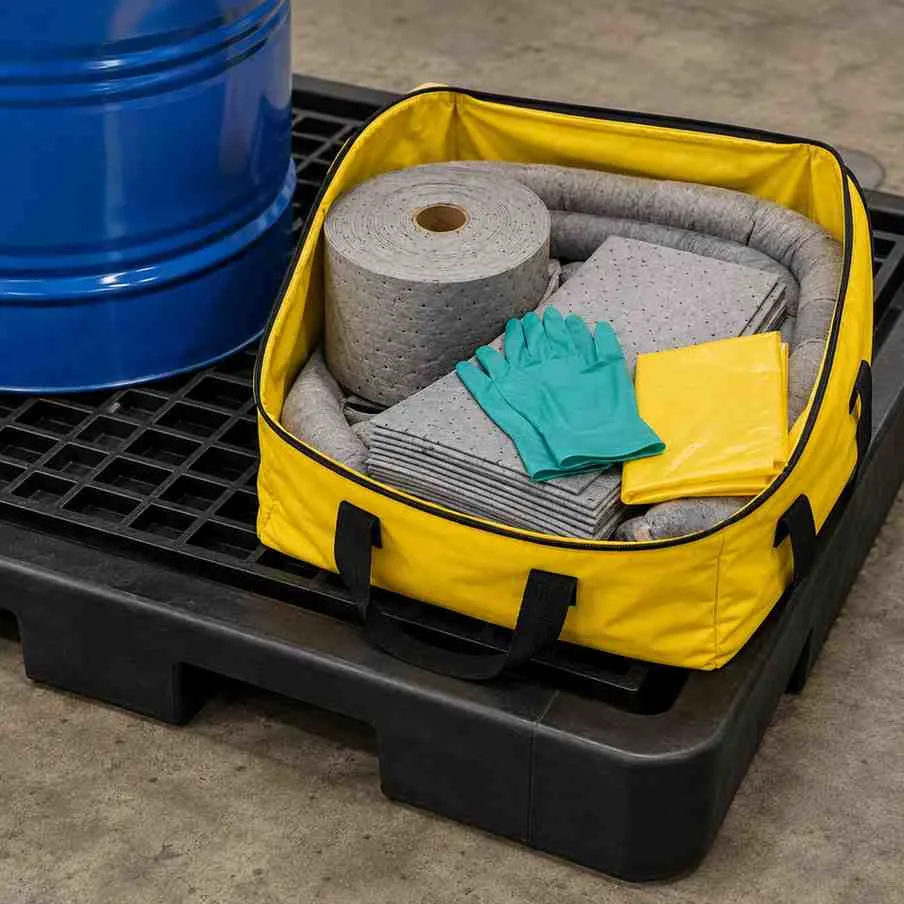
Not every spill kit handles every liquid the same way. Oil-only kits use absorbents that soak up petroleum products and fuels while repelling water, which makes them the right call for facilities near marine environments, ports, or vehicle maintenance bays. Chemical spill kits carry absorbents rated for a wider range of acids, solvents, and reactive liquids, sometimes paired with neutralizing agents for specific hazard classes. Universal kits sit in between, built for facilities that store a mix of coolants, oils, and mild chemicals under one roof.
Spectrum Lines spill kits organize its oil, chemical, marine, and universal spill kits by the type of liquid each one is built to handle. Matching the kit to the hazard, rather than defaulting to the largest kit available, is what actually keeps a facility ready when an incident happens. A kit stocked with the wrong absorbent still sits on the shelf looking prepared, right up until someone opens it during a real spill.
Where Spill Pallets and Storage Fit Into the Plan
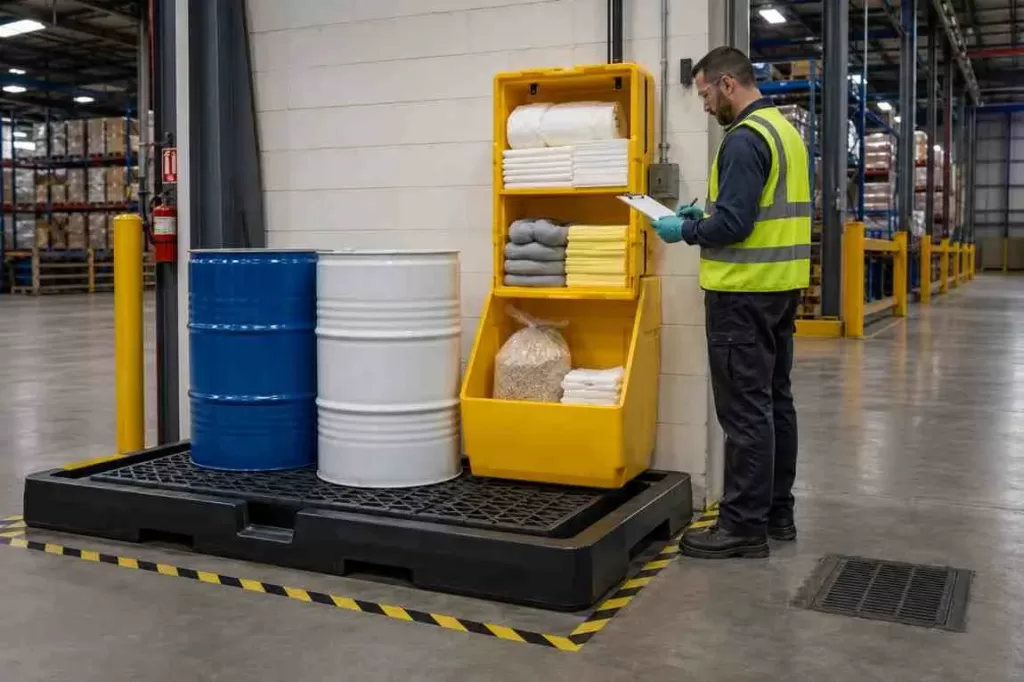
Containment does not start when a spill happens. It starts with how drums and containers are stored day to day. Spill pallets, built from UV-resistant polyethylene or polypropylene, sit under stored drums and catch leaks before they reach the floor. Low, medium, and high profile pallets exist because sump capacity, the amount of liquid a pallet can hold in reserve, changes with the number of drums stored on top of it.
Facilities storing flammable liquids for extended periods also need compliant storage cabinets, separate from the spill response kit itself. The two work together. A cabinet reduces the chance of a leak happening at all, while the containment system, the pallet, the tray, and the kit, handle it if one happens anyway.
Keeping Spill Containments Ready to Use
Equipment that sits untouched on a shelf for a year is not the same as equipment that gets checked on a schedule. Absorbent pads and socks lose effectiveness once they have taken on moisture from humid storage conditions, and gloves or goggles left in a sealed kit can degrade faster in high heat than most people expect. A basic response sequence still applies regardless of kit type: put on gloves and eye protection first, contain the spill using booms or dikes so it cannot spread further, absorb the liquid with pads or granules, then bag the contaminated material for disposal according to site rules.
Facilities that treat this as a once-a-year checklist item tend to discover gaps only when a kit gets opened mid-incident. A short quarterly check of stock levels and expiry dates catches most of those gaps before they matter.
Choosing a Spill Containment System That Matches Your Risk
Selecting the right setup starts with an honest look at what is actually stored on site. A few questions tend to narrow the decision fast. What liquids are involved, and are any of them reactive with water or with each other? What is the largest single container on site, since containment capacity is usually calculated as a percentage above that volume? Is the storage area near a drain, a water source, or a floor shared with another tenant?
A facility running a single 55-gallon chemical drum needs a smaller footprint than a distribution yard storing dozens of fuel containers. Buying an oversized universal kit for a single-hazard site wastes budget on absorbents that do not match the liquid stored. Buying an undersized kit for a multi-hazard site leaves a gap the moment something other than the expected chemical spills. The goal is coverage that matches actual inventory, not a generic kit pulled off a catalog page.
Final Thoughts
A spill containment system only earns its place on a facility floor if it matches what gets stored there, not what looks impressive on a shelf. Reviewing container sizes, liquid types, and proximity to drains before choosing equipment saves both budget and response time later. What does your current spill response setup look like against the liquids your facility actually handles?
FAQ
A spill kit responds to a spill after it happens, with absorbents, gloves, and disposal bags ready to grab. A spill pallet works before that, sitting under stored drums so a slow leak never reaches the floor. Most facilities need both, not one instead of the other.
Start with your largest stored container. Regulations generally expect containment capacity above that volume, often calculated as a percentage of the biggest drum on site. Count how many containers you store at once, then size the kit or pallet to match that total, not just one drum.
Not reliably. Oil-only absorbents are built to repel water and grab petroleum products, while chemical absorbents handle acids and solvents that would overwhelm an oil kit. Universal kits cover general-purpose liquids but are not a substitute for a hazard-specific kit where reactive chemicals are stored.
Yes, if hazardous liquids are stored above the regulatory threshold, typically containers over 55 gallons or a combined total past 100 gallons. Size does not exempt a facility from the requirement. A single drum without containment underneath it can still reach a drain or a shared floor.
Check absorbents, gloves, and disposal bags on a set schedule, ideally every few months, and immediately after any kit gets used. Humidity and heat common in Gulf warehouses can degrade some absorbent materials faster than a cooler climate would.