
MSDS Storage Box: What It Is and Why Your Workplace Needs It
Picture this. There is a chemical spill on the floor. A worker gets splashed. Someone runs to grab the safety sheet for that substance, and nobody in the room knows where it is. That is not a hypothetical scenario. It happens in real workplaces, and when it does, the consequences can be serious. An MSDS storage box exists to make sure that never happens at your facility. Simple concept, significant responsibility.
Table Of Contents:
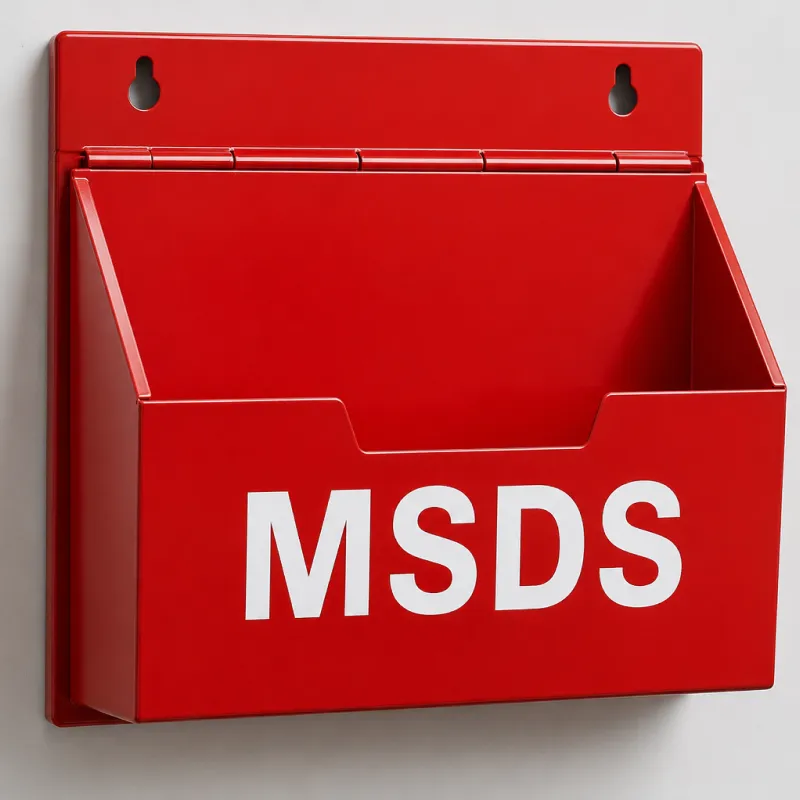
What Exactly Is an MSDS Storage Box?
MSDS stands for Material Safety Data Sheet. These documents carry everything a worker or emergency responder needs to know about a hazardous chemical: what it contains, how to handle it safely, what to do if someone is exposed, and how to respond in a fire or spill situation.
An MSDS storage box is a dedicated, clearly labelled container that holds all of these sheets in one organized location. It keeps them dry, readable, protected from chemical contact, and most importantly, findable within seconds.
It is worth noting that MSDS is the older term. The updated label under the internationally adopted Globally Harmonized System is SDS, or Safety Data Sheet. Both refer to the same type of document. Many facilities still use the original MSDS terminology, so you will see both in everyday use.
Why This Matters More Than People Think
There is a tendency to treat document storage as a paperwork issue. Tick a box, move on. But in facilities where hazardous chemicals are present daily, where workers are regularly exposed to fumes, splashes, or physical contact with substances, the location and condition of safety documentation are genuine safety issues.
Regulatory standards in most countries require that safety data sheets be immediately accessible to employees at all times during their shift. Not filed away in a manager’s office. Not saved on a shared drive that takes three password resets to access. Right there, at the point of work.
In the UAE and across GCC industrial sectors, occupational health and safety requirements continue to align with international frameworks, including OSHA standards and GHS protocols. Facilities that cannot produce compliant, organized documentation during an inspection face real consequences.
What Should You Actually Look For?
This is where the practical decisions happen. Not all units are built for industrial use, and buying the wrong one creates a false sense of compliance.
- Material construction:The box will likely live near chemicals. It should be able to handle splashes, humidity, and physical knocks without warping or deteriorating. High-density polyethylene and powder-coated steel are standard for good reason. Flimsy plastic will not survive the environment it is supposed to protect documents from.
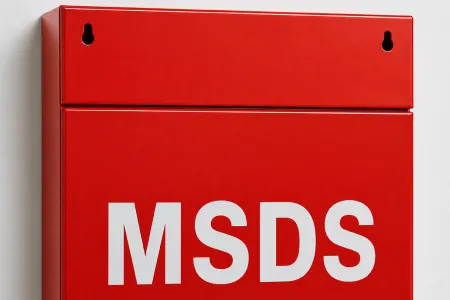
- Visibility:During an emergency, nobody is reading small print on a neutral-coloured cabinet. High-visibility yellow or red units with bold MSDS or SDS labelling are identifiable at a glance. That matters when seconds count.
- Capacity and organization inside: A box that fits 10 sheets, but your facility uses 60 chemicals, is not doing its job. Look for indexed dividers, enough internal capacity for your actual inventory, and a layout that lets staff retrieve a specific sheet fast.
- Weather resistance: For outdoor storage areas or high-humidity environments common in UAE industrial facilities, look for sealed units that keep documents dry and legible regardless of conditions.
Which Industries Actually Need One
Any site that stores, handles, or works near hazardous chemicals needs proper SDS document storage. That covers manufacturing plants, oil and gas operations, laboratories, automotive workshops, paint facilities, cleaning companies, and warehouses holding industrial substances.
Facilities that already use chemical spill kits, absorbent materials, or hazardous substance storage cabinets should treat MSDS storage as part of the same safety infrastructure, not a separate afterthought. The spill kit handles the incident. The MSDS box tells your team how to handle the chemical behind it. Both belong in the same conversation.
Where to Put Them in Your Facility
This is a question that often gets answered wrong. One central unit in the main office does not cut it for a large facility.
Standard guidance places MSDS boxes at the point of use: near chemical storage rooms, at entry points to production areas, beside high-risk workstations, and at emergency exits where first responders would enter. For multi-zone facilities, multiple units across different areas is the right call.
The test is straightforward. If a new worker, unfamiliar with the building layout, could find the relevant safety sheet for a chemical in under 30 seconds, your placement is working. If that is not realistic, it needs to change.
Final Thoughts
An MSDS storage box does not get much attention on a normal workday. It sits on the wall; nobody opens it, and everything is fine. The problem is that it only matters on the days when everything is not fine, and those are exactly the days when you cannot afford for it to be missing, disorganized, or inaccessible.
Getting this right is not complicated. It takes the right unit in the right location, stocked with current documents for every chemical on site, and staff who know it exists.
Spectrum Lines supplies industrial safety equipment across the UAE and GCC, including spill kits, safety cabinets, absorbent materials, and spill containment solutions that work alongside proper chemical document management systems. Browse the full range at spectrumlinesgcc.com.
FAQ
It is a container specifically made to store Material Safety Data Sheets, the documents that explain how to safely handle every hazardous chemical in your workplace. Inside, you will find organized sheets covering each substance on site, what it is, how it reacts, what protective equipment workers need, and what to do if something goes wrong. Some units also carry emergency contact information and spill response checklists alongside the sheets themselves.
Yes, functionally they are the same document. MSDS is the older name. The newer term is SDS, which stands for Safety Data Sheet, introduced through the Globally Harmonized System that many countries, including those in the GCC, have adopted. The main difference is that SDS documents follow a standardized 16-section format, which makes them easier to read across different languages and industries. If your facility still uses MSDS terminology, the documents are valid as long as the information is current.
In almost every occupational safety framework, yes. Employers are required to make safety data sheets immediately available to workers for every hazardous substance present at the workplace. The details vary by country and sector, but the underlying principle does not change: workers have the right to know what they are working near and how to protect themselves. In the UAE, this aligns with the Ministry of Human Resources and Emiratisation workplace safety requirements.
Digital systems are accepted in many settings, but they come with real practical limitations. If the power goes out, the server goes down, or a worker cannot remember login credentials during a stressful incident, digital-only storage fails at the worst possible moment. Most safety consultants recommend both: a digital backup for administrative management and a physical box at each relevant location for immediate access. For high-risk chemical areas specifically, physical storage is still the more reliable option.
Any time you bring a new chemical into the facility, the corresponding sheet should be in the box before anyone starts using it. For existing chemicals, replace sheets whenever a supplier issues a revised version. A full review of your chemical inventory and its documentation at least once a year is a reasonable standard practice, and after any significant change in what substances your facility uses or stores.