
3 Workplace Safety Essentials for Every UAE Facility
Safety isn’t about paperwork or tick-box exercises. It’s about making sure every person on your team goes home in one piece. In the high-stakes industrial environment of the UAE, having the right workplace safety essentials can be the difference between a minor mishap and a total site shutdown. If you are managing a warehouse in Dubai or a lab in Abu Dhabi, you can’t afford to play catch-up when a chemical spill happens.
The heat and intensity of the Gulf region add extra pressure to equipment durability and response times. At Spectrum Lines, we supply gear that actually works when the pressure is on. We’re talking about eye wash stations, specialized cabinets, and spill response kits that meet global safety standards while standing up to local conditions.
Table Of Contents:
Why Are Eye Wash Stations a Workplace Safety Essential?
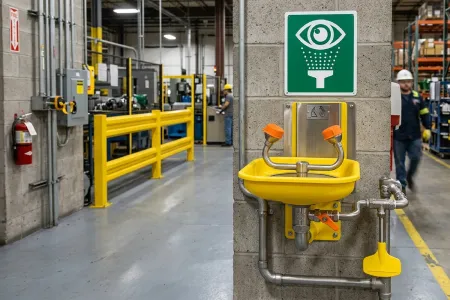
Emergency eye wash stations provide immediate decontamination by flushing out hazardous substances or dust from the eyes within the first few critical seconds of exposure. If a technician gets a splash of acid, they don’t have time to run to the bathroom. They need a dedicated station right there.
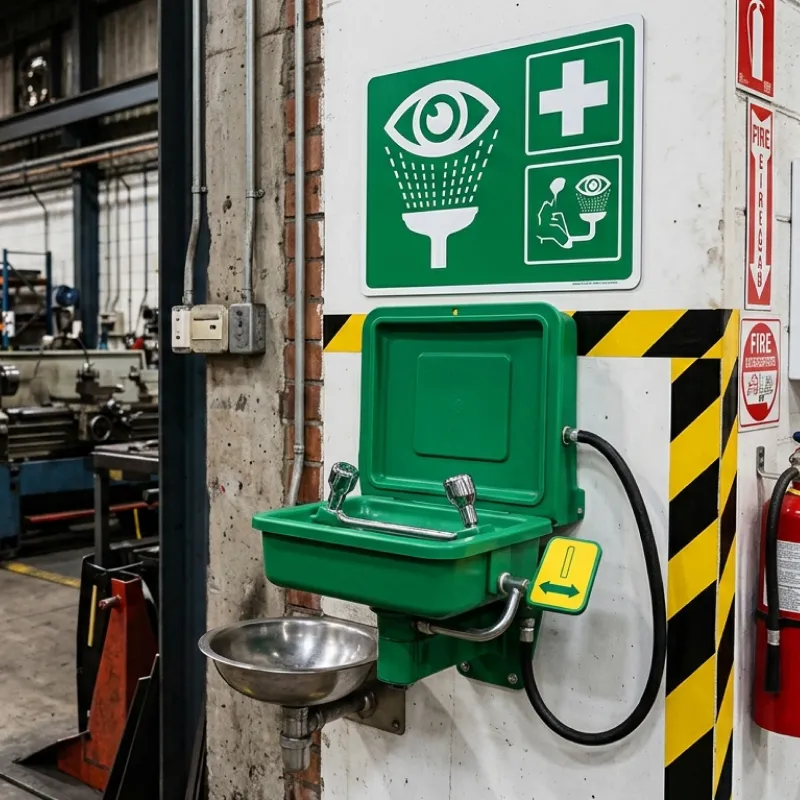
Seconds Matter in Eye Injuries
Permanent damage happens fast. A plumbed or portable eye wash kit allows for a continuous flow of water or neutralizing solution. It’s a non-negotiable for battery charging areas, chemical labs, or any place where grinding and welding happen. Without one, you’re essentially waiting for an ambulance while a worker’s vision is at risk.
Proper Placement is Key
Don’t hide these units behind boxes. Safety regulations usually dictate they must be accessible within 10 seconds of a hazard. In the UAE heat, ensuring the water temperature remains within a “tepid” range is also a major factor. Nobody wants to flush their eyes with piping hot water from a sun-baked pipe.
How Do Chemical Cabinets Prevent Warehouse Fires?
Chemical safety cabinets are specifically designed to store flammable or corrosive liquids in a way that contains vapors and provides a heat barrier in case of an external fire. Think of them as a safe for your most dangerous assets. They keep your workplace organized and, more importantly, they prevent a small spark from turning into a massive explosion.
Fire Ratings and Ventilation
A high-quality cabinet gives your team extra minutes to evacuate. These units are built with double-walled steel and air pockets that resist heat. If you’re storing thinners, fuels, or industrial cleaners, a standard wooden shelf is a disaster waiting to happen.
Organization and Compliance
Beyond fire protection, these cabinets help you stay compliant with local UAE safety audits. Proper labeling and segregated storage prevent accidental mixing of incompatible chemicals. It makes your facility look professional and keeps your insurance premiums from skyrocketing.
What Should Be Included in an Industrial Spill Kit?
An effective industrial spill kit must contain absorbent pads, pillows, socks, and personal protective equipment (PPE) tailored to the specific type of liquid used on-site. You can’t use a generic sponge to clean up a fuel leak. You need specialized materials that “lock in” the fluid so it doesn’t spread into the drainage system or contaminate the floor.
Universal vs. Oil-Only Kits
If you deal with hydrocarbons, you need an oil-only kit. These absorb oil but repel water, perfect for outdoor leaks during a rare UAE rainstorm or near wash bays. For general workshops, a universal kit handles water-based fluids and coolants. Having the right workplace safety essentials ready to go means a leak is a five-minute cleanup rather than an environmental fine.
Rapid Response Training
The kit is only as good as the person using it. Make sure your team knows exactly where the yellow bin is located. When a barrel tips over, the goal is “containment first.” Use the absorbent socks to create a dam around the spill, then use the pads to soak up the middle. It’s simple, but it saves lives and equipment.
Final Thoughts
Are you waiting for an accident to prove your facility is unsafe? Waiting for a “near miss” to buy a spill kit is a high-risk strategy that rarely ends well. Invest in quality gear, train your people, and build a culture where safety is a default, not an afterthought. What’s the biggest safety gap in your facility right now?
FAQ
The short answer? Yes. A kitchen sink doesn't have the right pressure, the hands-free operation, or the dual-nozzle spray needed to flush both eyes simultaneously. In an emergency, you won't be able to see well enough to adjust a faucet. You need a "one-push" system.
The absorbents don't really "expire," but the PPE (like gloves) can degrade over time in the UAE heat. Check your kits every six months. If the pads look brittle or the bin is cracked, it’s time for a refresh.
Not usually. Acids and flammables are a terrible mix. If the containers leak and the chemicals touch, you could get a toxic gas cloud or a fire. Always use separate cabinets for different classes of hazardous materials.
Yes. Civil defence and municipal inspectors look for proper chemical storage and emergency response equipment during audits. If you’re missing them, you’re looking at heavy fines or a "stop-work" order.