
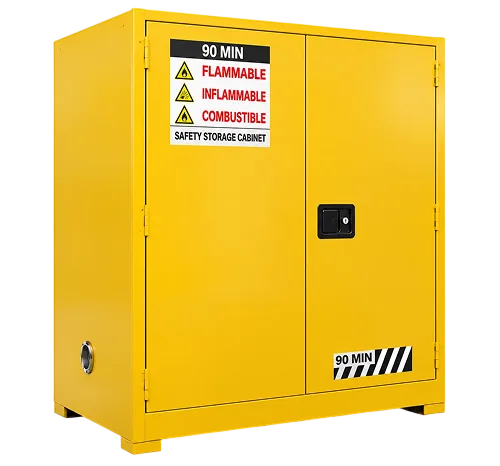
90-Minute Safety Cabinet
A 90-minute safety cabinet is a fire-rated place to keep flammable liquids inside your building. This one is tested to EN 14470-1 Type 90, so its fire resistance is rated at 90 minutes. That time is the whole point. The cabinet is meant to slow heat from reaching the containers inside, which may give people more time to evacuate and give the fire response longer to arrive. How it performs in a real fire still depends on where it stands, what is stored in it, and whether the doors are kept shut.
Both models share one design. The body is double-wall steel with fireproof insulation, and the double doors close and latch by themselves. Vents are fitted with flame arrestors. Size is what separates them: SSC045TW holds 170 litres, while SSC090TW holds 340 litres in a deeper body. We supply this fire-resistant safety cabinet from our base in Emirates Industrial City, Sharjah, to sites across the UAE and the GCC.
Select a model
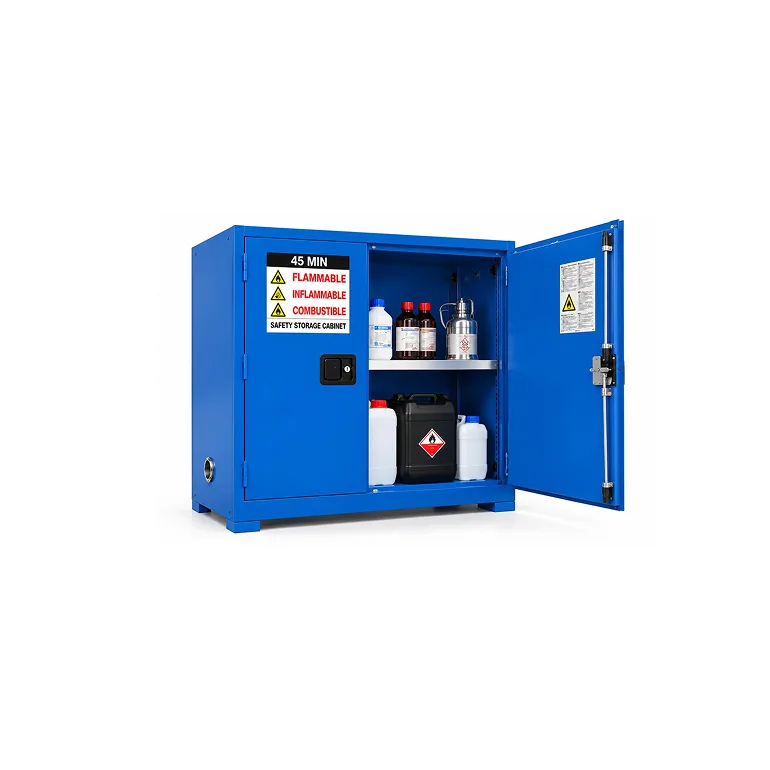
SSC045TW | 615 mm Deep | 170 L Capacity
SSC045TW is the one to pick when floor depth is limited. It stands 615 mm deep, so it can sit against a lab wall or along a workshop aisle without taking over the walkway. Inside are three adjustable shelves rated at 100 kg, with room for up to 170 litres of flammable liquids. Empty, it weighs 400 kg, so the load on your floor stays lower than with the larger model.
Best for: Laboratories, narrow storerooms, workshop aisles and sites that keep smaller daily quantities of solvents or fuel.
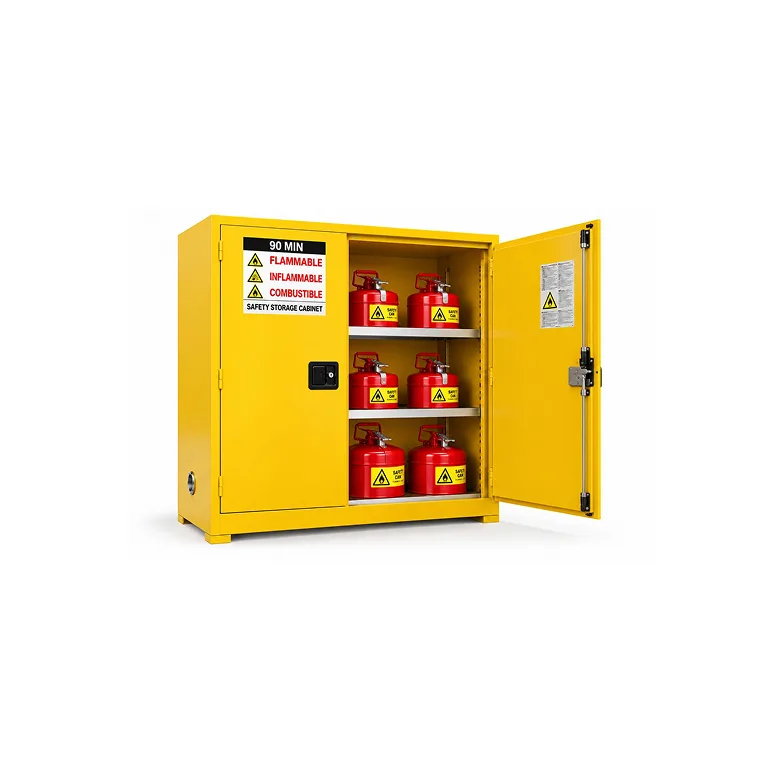
SSC090TW | 1020 mm Deep | 340 L Capacity
SSC090TW holds twice as much. With 340 litres of capacity in a 1020 mm deep body, it suits sites that would otherwise need two smaller cabinets side by side. Height and width are the same as the SSC045TW, so it takes up the same wall space and simply reaches further into the room. It weighs 680 kg before anything goes in, so check the floor can take it once the shelves are loaded.
Best for: Manufacturing plants, paint and adhesive lines, chemical stores and larger workshops with higher daily volumes.
Key Features
- 90-minute tested fire resistance, classified EN 14470-1 Type 90
- Double-wall steel construction with fireproof insulation between the walls
- Self-closing and self-latching doors
- Automatic door closure in the event of a fire
- Integrated air vents fitted with flame arrestors
- Height-adjustable shelves in galvanized steel or powder-coated finish, three per cabinet
- 3-point locking system with cylinder lock and key
- Epoxy-polyester powder-coated finish
- Earthing point for safe static discharge
Product Specifications
| Specification | SSC045TW | SSC090TW |
|---|---|---|
| Capacity | 45 Gal / 170 L | 90 Gal / 340 L |
| Door Type | Double / Self-Close | Double / Self-Close |
| Material | Steel | Steel |
| Shelves | 3 | 3 |
| Shelf Loading | 100 kg | 100 kg |
| Dimensions (H × W × D) | 2050 × 1198 × 615 mm | 2050 × 1198 × 1020 mm |
| Packing Size (H × W × D) | 2220 × 1250 × 680 mm | 2220 × 1250 × 1085 mm |
| Net Weight | 400 kg | 680 kg |
| Gross Weight | 425 kg | 702 kg |
Applications
Laboratories
Labs tend to keep many small containers of solvents that get opened every day. A cabinet close to the work area keeps them within reach during the shift and locked away after it. Where floor depth is tight, the 615 mm deep SSC045TW is usually the easier fit.
Manufacturing Plants
Paint lines and adhesive stations can mean flammable liquids in larger daily volumes, which is where the 340-litre SSC090TW makes sense. Position it away from forklift routes. Nothing should be able to block the doors from closing.
Workshops
Fuels and degreasers are routine in maintenance workshops, and paint thinners are common in fabrication bays as well. Connect the earthing point before you start loading the shelves.
Storage Facilities
Warehouses and chemical stores holding flammable stock indoors can use the cabinet as a fire-rated compartment for the containers that need it most. Before you plan quantities, check the storage limits and placement rules your local Civil Defence authority applies to your site.
Safety & Storage Information
This cabinet is intended for indoor storage of flammable liquids in closed containers. For acids and alkalis, a corrosive storage cabinet is generally the better match.
- Install, level, and earth the cabinet following the manufacturer’s instructions.
- Keep the doors closed when you are not loading or removing stock. Never wedge them open.
- Store liquids in sealed, labeled containers and keep the Safety Data Sheets close by. An MSDS box mounted near the cabinet is one simple way to do that.
- Stay within the listed 100 kg shelf loading.
- Check hinges, latches, and vents at regular intervals. If the doors stop closing properly, take the cabinet out of use until it is repaired.
- Follow your company’s safety procedures and the requirements of your local Civil Defence authority on quantities, location, and signage.
Why Choose a 90-Minute Safety Cabinet?
In a lot of workplaces, flammable liquids end up spread around. A few tins of thinners sit on a workshop shelf. Fuel cans collect in a storeroom corner, and solvent bottles drift towards whichever bench used them last. Every one of those containers can feed a fire.
A safety cabinet for flammable liquids pulls that stock into one fire-rated space. Here, the liquids sit behind insulated double steel walls tested for 90 minutes under EN 14470-1, with doors that shut themselves. The cabinet is built to slow how quickly a nearby fire reaches what is stored inside. It does not prevent fires, and it is no substitute for good housekeeping around it.
Access control is the other half. The 3-point lock and key mean only people you authorize can open the doors, which matters on busy sites with contractors coming and going.
Then there is order. Three height-adjustable shelves let you set the spacing around the containers you actually keep, so tall cans and short bottles are not fighting for the same gap. The earthing point lets you bond the cabinet to your site earth too. That is a basic step for discharging static wherever flammable vapor may be present.
A 90-minute safety cabinet also makes stock checks easier. Whoever runs your safety inspections opens one locked cabinet instead of walking the whole site looking for stray tins.
SSC045TW vs SSC090TW: Which Model Fits Your Storage Requirement?
Start with how much you need to store in one place. Up to 170 litres, SSC045TW does the job in a 615 mm deep footprint and weighs 400 kg empty. Beyond that, SSC090TW doubles the capacity to 340 litres.
The bigger model asks more of your site, though. It is 1020 mm deep and weighs 680 kg before anything goes inside, so check that the floor can carry it fully loaded and that both doors have room to swing open. Plan the delivery route as well. Both models arrive packed at 2220 mm high, which may be too tall for a standard internal doorway, and a crate of 425 kg or 702 kg will likely need lifting equipment at the delivery point.
Related Products

Safety Storage Cabinet
The ESNICO Safety Storage Cabinet is a professional-grade chemical storage solution designed to protect people, property,
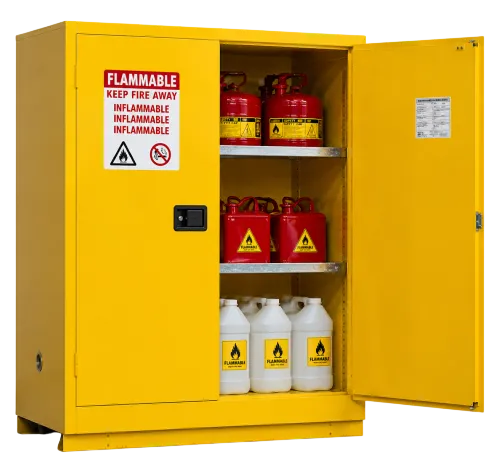
Flammable Safety Storage Cabinet
The ESNICO Flammable Storage Cabinet is engineered for the safe and compliant storage of flammable liquids in industrial and commercial environments.
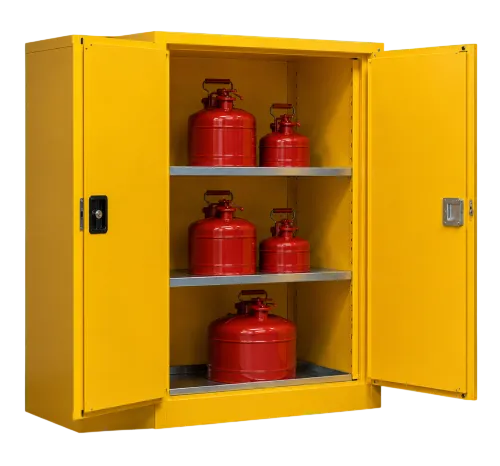
Combustible Safety Storage Cabinet
The ESNICO Combustible Storage Cabinet is purpose-built for the safe and compliant storage of combustible liquids in demanding industrial environments.

Corrosive Storage Cabinet
The SSC045CB is a professional-grade corrosive storage cabinet engineered to provide a safe, compliant,

Drum Storage Cabinet
The ESNICO Drum Storage Cabinet range is purpose-engineered for the safe, compliant, and efficient storage of 200-litre drums containing flammable or hazardous liquids.

PPE Storage Cabinet
The ESNICO PPE045Y is a purpose-built, heavy-duty storage cabinet designed exclusively for the organised, protected, and immediately accessible storage of personal protective equipment.
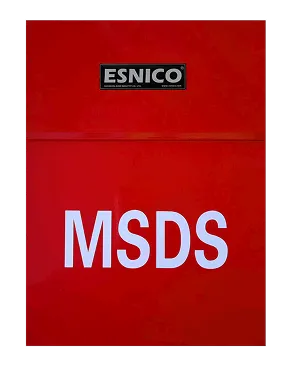
MSDS Box SSC001
A robust and long-lasting MSDS box that makes safety information about chemicals or hazardous materials used in industrial settings easily accessible.
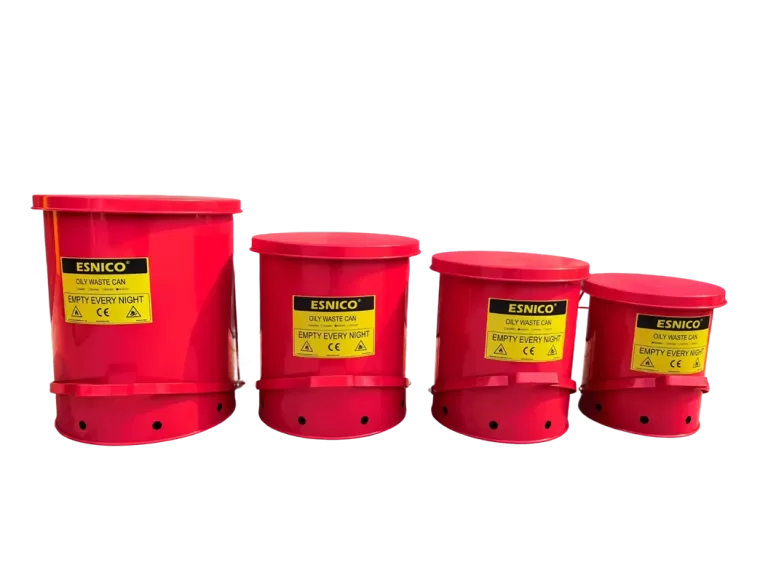
Oily Waste Can 6 Gallon
Rags wipes and paint rags soaked in oil grease and solvents can all be safely collected in a 6- gallon oily waste can.
Oily Waste Can 10 Gallon (SC01001)
The 10 Gallon Oily Waste can is an effective way to store flammable industrial waste while providing compact, efficient storage.
Oily Waste Can 14 Gallon (SC01401)
The 14-gallon oily waste can is designed to hold larger quantities of combustible waste materials. For industrial settings that need a lot of waste collection, this is a dependable safety solution.
Oily Waste Can 21 Gallon (SC02101)
The 21-gallon oily waste can is a large-volume safety container that has been made to be used in industrial applications that are tough.
Product Brands We Offer










FAQ
Capacity and depth. SSC045TW holds 170 litres and is 615 mm deep, while SSC090TW holds 340 litres and is 1020 mm deep. Height, width, fire rating, and features are the same on both.
It holds 90 gallons, or 340 litres. That is double the smaller model, and the cabinet itself weighs 680 kg empty, so it is worth checking your floor before it arrives.
Three. They adjust in height, so you can space them around the containers you store.