
Spill Response Equipment: Why Spill Barriers Matter
A drum tip. Maybe a hose fitting lets go. You have got maybe ninety seconds before that liquid finds the floor drain, and once it does, the problem stops being a housekeeping issue and becomes an environmental one. Most spill response equipment sitting in UAE facilities today is built to soak up what has already spread. Very little of it is built to stop the spreading in the first place. That gap is where a spill barrier earns its place.
This piece looks at what a barrier actually does, where it fits alongside the rest of your kit, and why teams that skip it usually regret it during the cleanup.
Table Of Contents:
What Does a Spill Barrier Mean to Do?
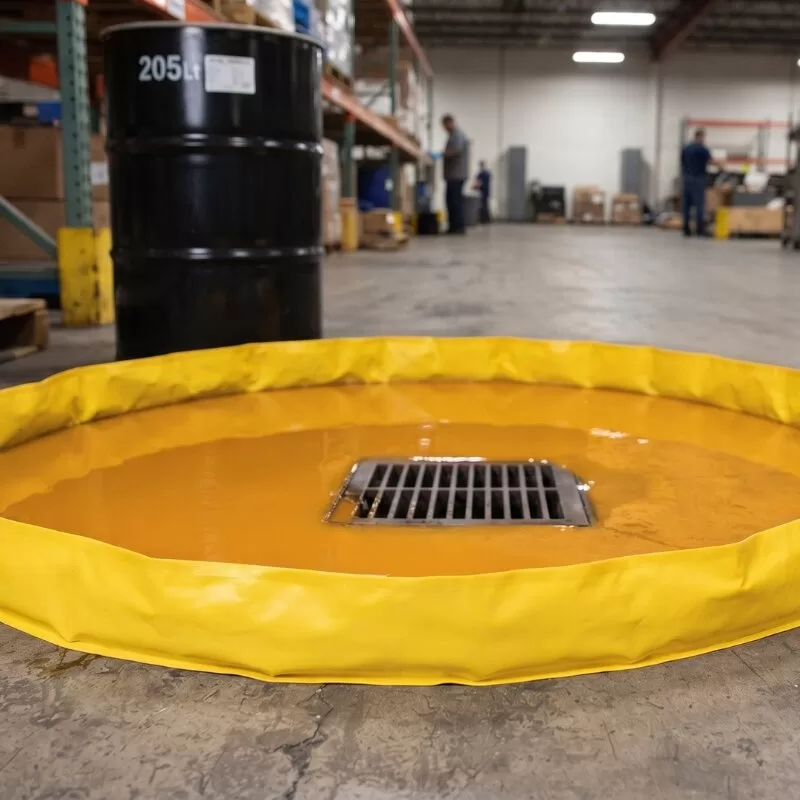
A spill barrier is a flexible length of chemical-resistant material you lay down to contain and control the spread of liquids during a leak or spill. Nothing complicated about it. You drop it around a drain, a machine base, or a doorway, press it into position, and the liquid stops travelling.
The material matters here. Spectrum Lines builds its barriers from high-grade chemical-resistant compounds so they hold up against oils, coolants, solvents, and a wide range of hazardous chemicals rather than degrading on contact. They conform tightly around uneven surfaces, which is the part cheaper alternatives get wrong. A barrier that will not seal against a rough concrete floor is not really a barrier.
Containment First, Absorption Second
Here is the sequencing most teams get backwards.
Pads and granules are excellent at what they do. They are not fast enough to outrun a moving liquid on a sloped floor. By the time someone has torn open a pack of absorbent pads, the spill has already reached the drain trench.
Barriers reverse that order. Contain, then absorb. You define the boundary of the incident before you start cleaning it, which shrinks the affected area, cuts the volume of contaminated waste you have to dispose of, and keeps the material away from drainage systems entirely.
That last point carries real weight. Discharges reaching stormwater or municipal drains can trigger regulatory reporting obligations, and the environmental consequences of a spill entering a watercourse are documented extensively by international regulators.
Where Spill Response Equipment Falls Short Without a Barrier
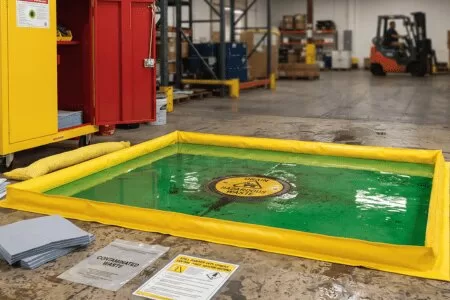
Walk through a typical facility store and you will find absorbent socks, granules, disposal bags, gloves, goggles. Solid kit. But socks are absorbent products doing double duty as containment, and they saturate. Once saturated, a sock stops holding a line.
A dedicated barrier does not absorb. It blocks. Different job, different tool.
Where They Get Used
Industrial facilities, laboratories, workshops, and warehouses all use them, and they are especially worth having near storage areas, drains, and doorways. Anywhere a liquid could travel from a controlled zone into an uncontrolled one.
Reusability
Many spill barriers can be used again depending on the material and the substance they contain. After cleaning and proper maintenance, they go back into routine spill control service. That changes the cost conversation considerably compared with consumables you bin after a single incident.
Always check material compatibility for your specific chemicals before assuming a barrier suits a given application. Compatibility data should come from the manufacturer’s safety data sheet, not from an assumption.
Building the Barrier Into an Existing Kit
You do not need to rebuild your programme. Add the barrier to what you already stage.
Keep it at the outer edge of the kit so it comes out first. Train whoever grabs the kit to deploy the barrier before opening anything else. Position spare units near the specific drains and doorways you have identified as risk points, because carrying a barrier fifty metres defeats the purpose.
Spectrum Lines supplies the wider range that surrounds this step, from spill pallets and drum pallets through to absorbents and safety cabinets, across the UAE, wider Middle East, and Africa. The company works with manufacturers in Europe, Asia, and the Middle East, and its products carry ISO and CE marks along with other quality certifications.
Final Thoughts
Barriers are cheap relative to what a spill costs once it leaves your building. They are also the single easiest addition to make to an existing rapid-response setup, because nothing else in the kit has to change.
So look at your nearest floor drain. If a drum went over three metres from it right now, what would actually stop the liquid getting there?
FAQ
It contains and controls the spread of liquids during a leak or spill. Simple as that. It keeps hazardous substances out of your work areas, away from drains, and out of the environment.
Often, yes. Depends on the material and what it contains. Clean it properly, maintain it, and it goes back into routine service. Aggressive chemicals are the exception. Check before you reuse.
Water, oil, coolants, solvents, and plenty of hazardous chemicals. That said, do not guess. Check material compatibility against the actual substance you are storing.
Near drains, storage zones, and doorways. Basically anywhere liquid could escape a controlled area. Laboratories, workshops, warehouses, and industrial plants all use them the same way.
Yes. They do opposite jobs. The barrier stops the spread. The absorbents remove what is inside the boundary. You want both.