
Emergency Preparedness for Industrial Facilities
Al Sajaa Industrial in Sharjah is packed with manufacturing units, chemical handlers, and workshops running side by side. In a zone like this, emergency preparedness is not a policy line buried in a manual. It is the gap between a five-minute cleanup and a shutdown, or between a fast eye rinse and a permanent injury.
Most industrial incidents fall into two categories: a spill on the floor or a splash near the eyes. Both need a response that starts before the accident, not after. That means having the right containment tools, the right storage setup, and the right rinse station already in place and already checked.
Table Of Contents:
Chemical Spill Response Starts Before the Spill Happens
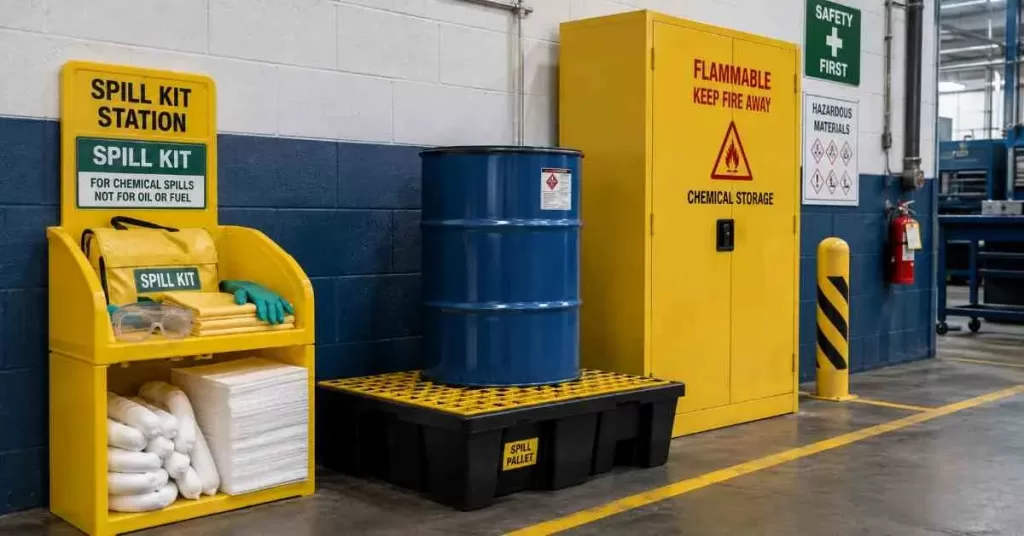
A spill kit is only useful if someone has stocked it correctly and knows where it sits. A working kit typically holds absorbent socks, granular absorbents, absorbent pads, protective gloves, goggles, and sealed waste bags for the contaminated material. Oil spill kits, chemical spill kits, and marine spill kits are built differently because the liquids behave differently, so matching the kit to the hazard matters more than buying the biggest one available.
Absorbents themselves come in several forms: pads, socks, pillows, and rolls, most made from pure polypropylene. These soak up ten to twenty times their own weight and work across industrial floors as well as marine settings like harbours, rivers, and ponds. Pairing absorbents with drum spill pallets, which are molded from UV-resistant polyethylene or polypropylene and rated low, medium, or high profile by sump capacity, keeps stored liquids contained if a drum ever leaks on its own.
Drip trays handle the smaller, ongoing risk: the steady drip under a vehicle or a piece of machinery. Made from recycled polypropylene with capacities from ten to a hundred and fifty litres, they catch oil and chemical drips before they spread across the floor and turn into a slip hazard. None of this equipment works if it sits in a locked storeroom during an actual spill. Kits and pallets need to live near the process they protect, checked on a schedule rather than assumed to be full.
Containment, Storage, and Isolation Controls
Flammable and corrosive chemicals need dedicated storage, not a shelf in a general supply room. Safety cabinets built for this purpose come in customizable sizes and are designed around ISO and CE compliance standards, which matters for insurance audits as much as for daily safety.
Isolation is the other half of containment. Lockout and tagout systems lock down mechanical and electrical equipment during maintenance so a machine cannot start unexpectedly while someone has their hands inside it. These systems, built to ISO and ANSI standards, are a basic requirement anywhere rotating equipment or live circuits are serviced regularly. A technician tagging out a valve should not have to trust that a colleague remembers not to switch it back on. The lock does that job instead, and it does it consistently, shift after shift.
Eye Wash Stations and Emergency Preparedness Standards
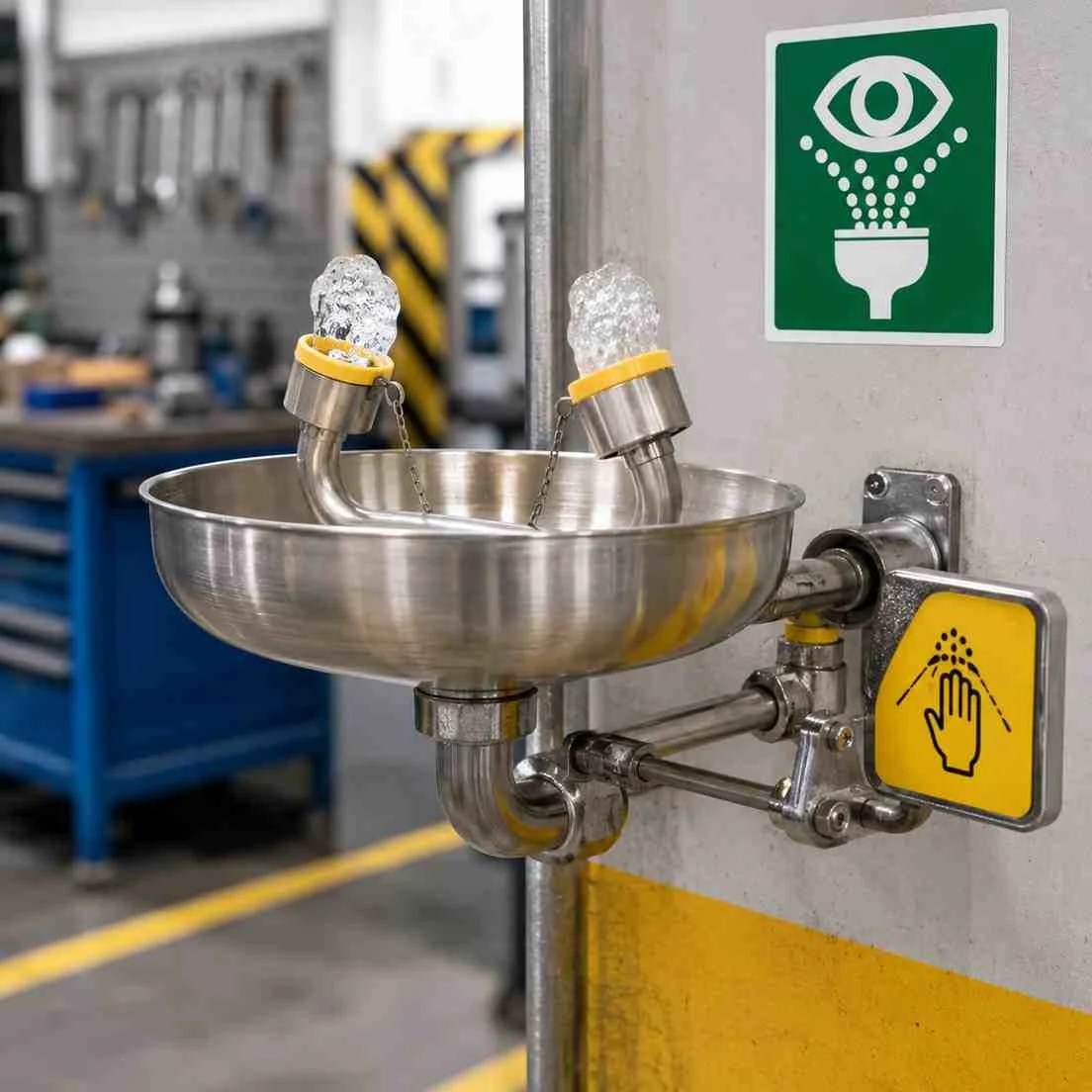
Eye injuries happen fast. A chemical splash or a burst of particulate matter needs a rinse within seconds, not minutes, which is why emergency preparedness plans treat eye wash access as a placement problem as much as an equipment problem. UAE workplace guidance calls for an eye wash station to be reachable within ten seconds of any area where hazardous substances are handled.
Once someone reaches the station, the flush itself needs to run long enough to work. The ANSI Z358.1-2014 standard sets a benchmark of at least fifteen minutes of continuous flushing, and portable units like the fourteen-gallon ESW06014 or the eight-gallon ESW06108 are built around gravity-fed systems that meet this without needing electricity or plumbing. Wall-mounted units, such as stainless steel models with aerated nozzles, cover fixed locations where a plumbed water line is already available.
Facilities generally choose between five formats: pedestal-mounted units on a fixed pole, wall-mounted units that save floor space, portable tanks for sites without plumbing, small eye wash bottles for the first seconds of response, and combination shower-and-eyewash units for full-body decontamination. None of these replace safety goggles. They exist for the moment protection fails or was not worn in time.
Maintenance keeps any of this useful. Plumbed stations need regular water flow to stay clean, nozzles need checking for blockages, and portable units need their solution replaced on a schedule rather than left to sit for months. A station that has not been tested since installation is a liability dressed up as a safety feature, and it tends to fail exactly when it gets used for the first time.
Final Thoughts
A strong emergency preparedness setup rarely comes from one large purchase. It comes from matching spill kits to the actual chemicals on site, storing flammables properly, isolating equipment before maintenance, and placing eye wash stations exactly where the ten-second rule requires. Walk your floor this week and check whether every hazard zone actually meets that standard. If it does not, which gap would cost you the most in an actual incident?
FAQ
UAE workplace guidance requires eye wash access within ten seconds of any area handling hazardous substances. That is roughly the distance you could walk blindfolded and still find it, so placement testing matters as much as having the unit at all.
At least fifteen minutes, based on the ANSI Z358.1-2014 benchmark that most eye wash equipment is built around. Some safety teams recommend pushing to twenty minutes for stronger chemicals, so check your site's specific hazard data before setting the rule.
Absorbent socks, granular absorbent, absorbent pads or pillows, protective gloves, goggles, and sealed bags for contaminated waste. Bigger kits sometimes add neutralizing powder or a scoop, but the core five items are non-negotiable for any kit worth stocking.
No. Units like the ESW06014 and ESW06108 run on a gravity-fed tank, so they work in workshops, remote sites, or temporary setups where running a water line isn't practical. Check the tank size against your headcount before choosing one.
Because a regular shutoff can be flipped back on by someone who doesn't know a technician is inside the machine. Lockout and tagout physically locks the equipment down and tags it, built to ISO and ANSI standards, so accidental restarts during maintenance become far less likely.