
Safety Cabinet Maintenance: Keep Your Lab Safe
Your safety cabinet isn’t just a heavy piece of metal in the corner. It’s the only thing standing between your team and a chemical disaster. But here is the problem: most people treat it like a “set it and forget it” appliance. It isn’t a fridge. If you skip the upkeep, you aren’t just risking a fine. You’re risking lives.
At Spectrum Lines GCC, we’ve seen what happens when maintenance slips. Filters clog. Sensors fail. Door seals dry out. Let’s talk about how to keep your safety cabinet running like a tank without the headache.
Table Of Contents:
Why Skip-Level Maintenance Is a Gamble
Think of your cabinet as a living system. It breathes. It filters. It protects. When you ignore safety cabinet maintenance, you’re essentially suffocating your lab’s safety protocols. Poor airflow doesn’t just smell bad—it means toxic fumes are staying exactly where you don’t want them: in your lungs.
You need a schedule. Not a “when I remember” list, but a hard calendar. Regular checks ensure that the investment you made in high-quality hardware actually does its job when things go south.
Factory operations may suffer monetary losses due to asset and equipment use. Consequently, it is important to understand and prevent chemical spills from industries.
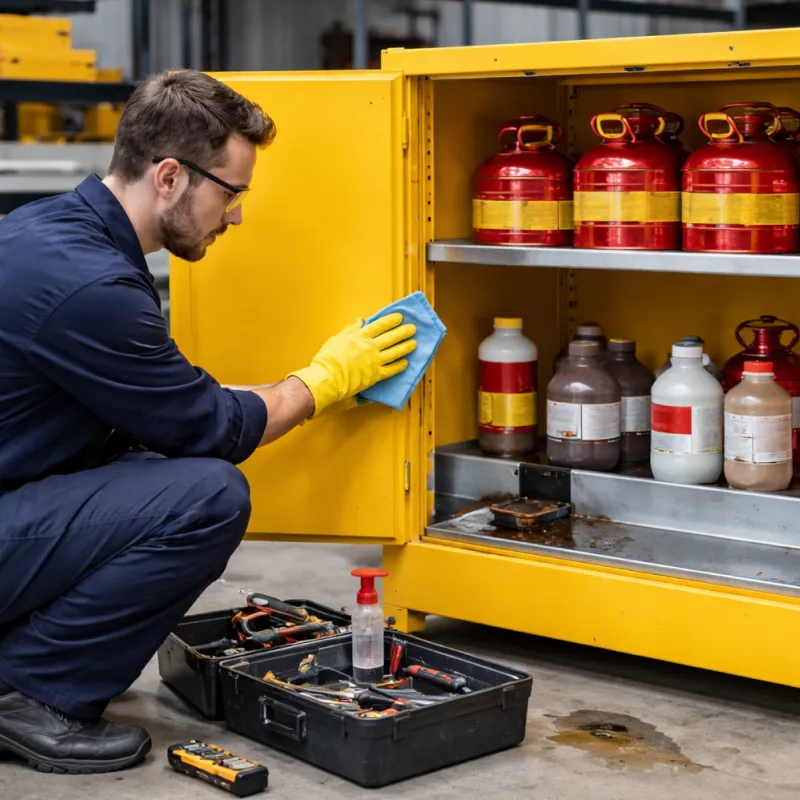
How Often Should You Check the Basics?
Daily. Yes, every single day. Before you even start your shift, look at the gauges. Are the pressure readings normal? Check the workspace for spills. Even a tiny drop of a corrosive chemical can eat through the interior lining over time.
Weekly, you should be looking at the mechanical parts. Does the door close flush? Is the latch sticking? In the heat of the GCC region, seals can degrade faster than you’d think. Dust is another silent killer here. If your ventilation intake looks like a dryer lint trap, your motor is working double time. It will burn out. It’s not a matter of if, but when.
The Deep Dive: Performance and Longevity
Once a month, do a “stress test.” Check the alarms. If the power goes out or the airflow drops, will that buzzer actually wake anyone up? Most modern units from Spectrum Lines GCC come with smart monitoring, but technology still needs a human eye.
Keeping your gear in top shape ensures longevity and performance. It’s the difference between a cabinet that lasts five years and one that lasts twenty. Clean the interior with compatible agents. Don’t just grab the first bottle of glass cleaner you see. Use what the manual says. If you don’t, you might accidentally trigger a reaction with the very chemicals the cabinet is meant to contain.
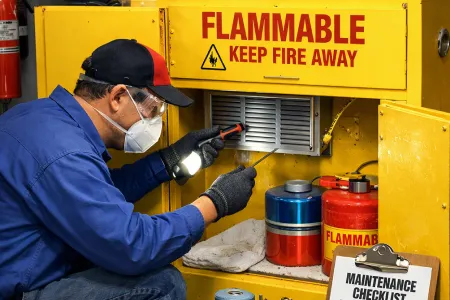
Airflow: The Pulse of Your Safety Cabinet
If the air isn’t moving, the cabinet is just a glorified cupboard. You need to ensure the exhaust system is clear. Birds love building nests in external vents. Sand can build up in ductwork.
If you notice the fan sounds “choppy” or louder than usual, stop. That’s a bearing failing or a blockage. Ignoring that sound is a great way to turn a $200 repair into a $5,000 replacement. Keep it clean. Keep it clear.
Final Thoughts
Maintenance isn’t a chore; it’s an insurance policy. A well-kept cabinet keeps your team safe and your lab compliant. Is your current maintenance log up to date, or are you just crossing your fingers?
FAQ
Check the airflow monitor first. If the numbers look off or the "low flow" light is flickering, get out and call a pro. Also, do the "visual check." If fumes are lingering or there’s a weird smell, the system is failing you.
The short answer? Only if you have the exact OEM part. Don't use duct tape or hardware store weather stripping. These cabinets are rated for fire and chemical resistance. Your DIY fix isn't.
It’s usually one of two things: a blocked filter or a sensor that’s dirty. Don't just mute it and walk away. That alarm is trying to save your skin. Find the source or shut down the station.
Yes. You wouldn't fly on a plane that hasn't been inspected, right? Pros have the tools to measure face velocity and HEPA integrity that you just can't do with a flashlight and a prayer.