
What’s the Right Way to Dispose of Biohazard Waste?
Biohazard waste isn’t just “gross.” It’s dangerous. One wrong move and you’re looking at a serious health risk or a massive fine. You can’t just toss blood-soaked rags or used syringes into the breakroom bin and hope for the best. If you want to keep your team safe and your business compliant, you need a plan. Let’s get into how you should actually dispose of biohazard waste without the headache.
Table Of Contents:
Why You Can't Treat Biohazard Waste Like Regular Trash
Think about it. Biohazard waste contains pathogens, bacteria, viruses, and microorganisms that cause disease. We’re talking about blood, bodily fluids, and “sharps” like needles. When these end up in a standard landfill, they leak into the environment.
This isn’t just about being eco-friendly. It’s about public safety. In places like Dubai and Qatar, the regulations are strict for a reason. If you’re managing a facility, the liability rests on your shoulders. You need the right tools, like a dedicated body fluid clean-up kit, to handle spills before they become a crisis.
What Counts as Biohazard Waste?
Not everything with a drop of blood on it is a biohazard. But most things are. Here is the quick list:
- ➜
Sharps: Needles, scalpels, and glass slides. - ➜
Liquid Waste: Blood or other infectious bodily fluids. - ➜
Solid Waste: Gloves, towels, or PPE soaked in infectious material. - ➜
Pathological Waste: Human or animal tissue.
If you are a business owner or a lab manager, you have to categorize these correctly. Mixing them up leads to higher disposal costs and potential safety breaches.
The Step-by-Step to Dispose of Biohazard Waste
Let’s keep this simple. You don’t need a manual; you need a process.
1. Sort it at the source
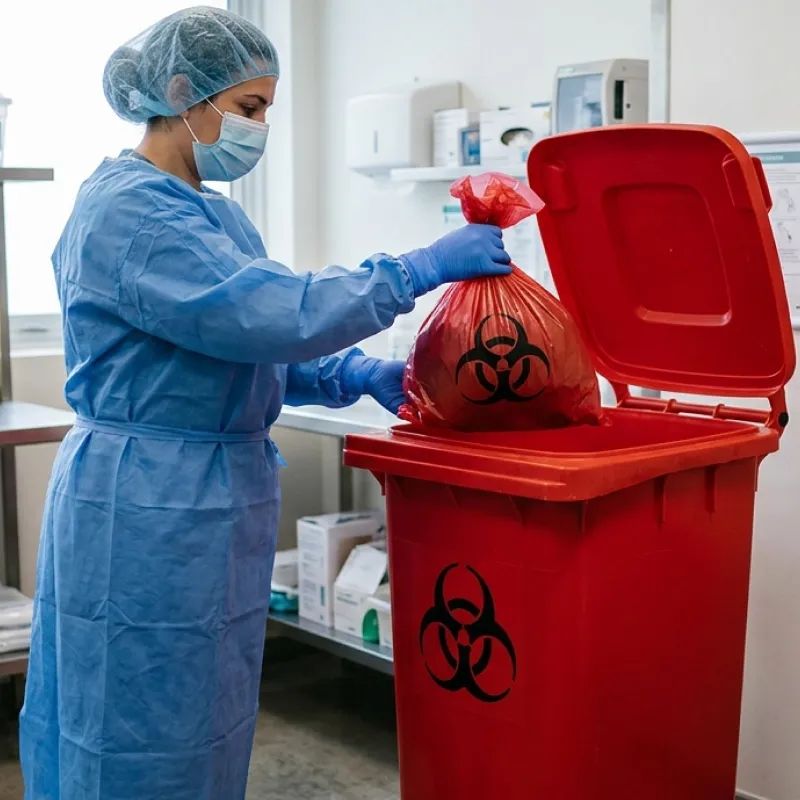
Don’t wait until the end of the day to separate your trash. Place colour-coded bins exactly where the waste is generated. Red bags are the industry standard for biohazards. Yellow often signifies clinical waste.
2. Use the right containers
Liquids need leak-proof containers. Sharps MUST go into puncture-resistant boxes. Never, under any circumstances, try to shove a needle into a plastic bag. It won’t end well.
3. Label everything
If it’s biohazardous, it needs the universal biohazard symbol. Clear labelling ensures that janitorial staff or waste contractors know exactly what they are touching.
Storage and transport
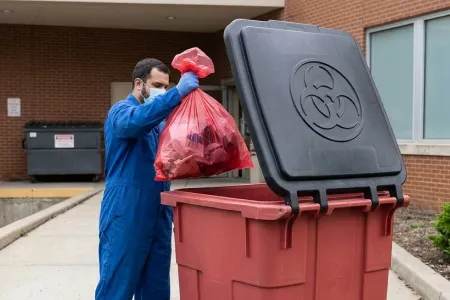
Store your waste in a secure, climate-controlled area. You don’t want these bags sitting in the sun. When it’s time to move it, use a licensed medical waste disposal service. They have the gear to incinerate or autoclave the waste safely.
Handling Accidents on the Fly
Spills happen. Someone gets a nosebleed in the lobby or a container leaks in the lab. You can’t wait for a professional crew to show up for a small mess. This is where having a specialized kit is a lifesaver.
Using a proper cleanup kit ensures you have the solidifiers and disinfectants needed to neutralize the threat instantly. It’s about being proactive.
Wrapping It Up
Disposing of dangerous waste isn’t a “nice to have” skill. It’s a core part of running a safe, professional operation. Whether you’re running a clinic in Sharjah or a lab in Abu Dhabi, the goal is the same: zero contamination.
FAQ
Look, a soda bottle isn't a sharp container. It can be punctured, and it’s a nightmare for waste workers. Buy a real, puncture-resistant sharps box. It’s cheap, and it saves lives.
You risk a massive fine and, more importantly, you put the local waste management team at risk of infection. If a red bag ends up in a normal landfill, the authorities can often trace it back to the source. Don't risk it.
If it's just water? No. If it's blood or vomit? Absolutely. A kit has the specific chemicals to kill pathogens that regular soap won't touch. Plus, it has the PPE to keep you safe while you clean.
It depends on your local laws, but generally, you don't want it sitting for more than 7 to 30 days. If it’s pathological waste (tissue), it usually needs to be refrigerated or frozen if it’s staying on-site for more than 24 hours.