
Why DIY Biohazard Cleanup Is a Risky Move
A spilled container in the lab or an accident in a hotel lobby. It looks like a simple mess. You grab a bucket and some bleach, thinking you’ve handled it. Stop. You’re likely walking into a trap. Attempting biohazard cleanup without the right gear and training isn’t just a tough chore; it’s a massive gamble with your health and your legal standing.
Table Of Contents:
Is Your "Clean" Actually Dangerous?
The short answer? Yes.
Most people assume that if a surface looks clean, it is clean. That’s a mistake. Biohazards like bloodborne pathogens, viruses, and hazardous chemicals are microscopic. Standard household cleaners aren’t designed to kill things like hepatitis B, which can live on a dry surface for up to a week. Without professional-grade disinfectants, you aren’t cleaning; you’re just moving germs around.
Even worse, DIY efforts often lead to cross-contamination. Using a standard mop or cloth can spread invisible pathogens into your ventilation system, onto door handles, or into your breakroom. Once it’s in the air or tucked away in porous materials like carpets, the risk remains long after the visible stain is gone.
Why Proper Gear Beats "Common Sense"
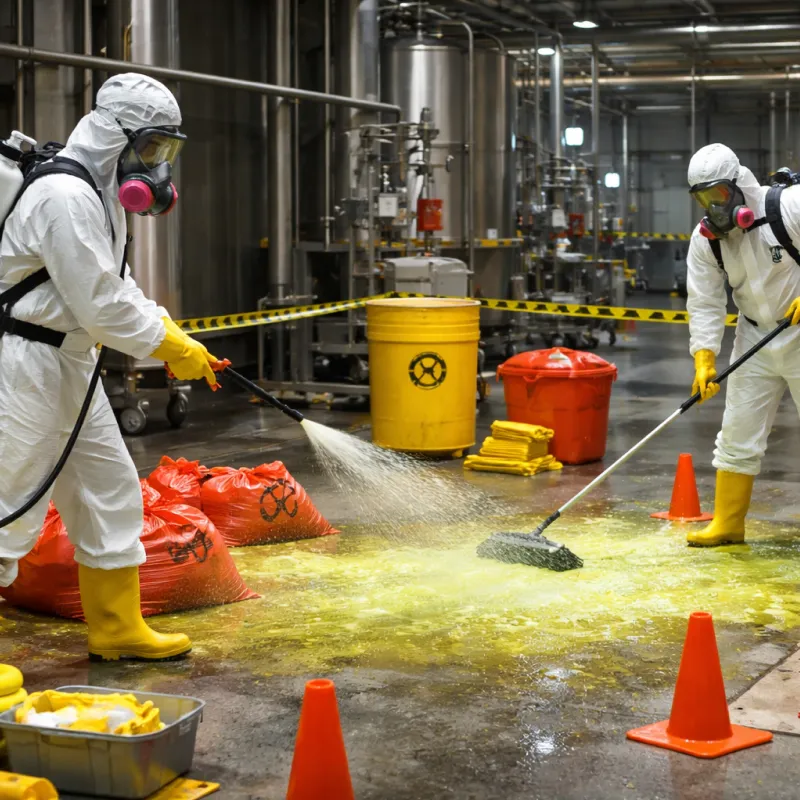
You wouldn’t enter a burning building without a suit, so why touch a biohazard without the right barrier? The biggest myth is that a pair of kitchen gloves is enough. It isn’t. You need specialized PPE that provides adequate chemical splash protection to ensure nothing touches your skin or eyes.
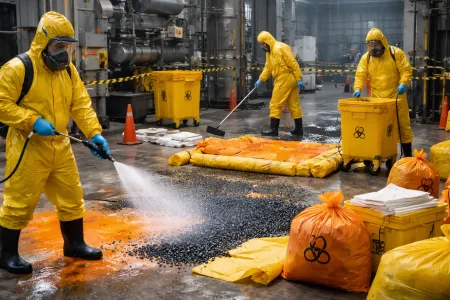
A professional body fluid clean-up kit is designed for this exact moment. It contains everything from absorbent granules to medical-grade disinfectants and heavy-duty disposal bags. Using a dedicated kit ensures that you aren’t just reacting to a spill—you’re containing it systematically.
UAE Regulations and the Legal Side of Safety
In the UAE, workplace safety isn’t a suggestion. Under frameworks like OSHAD and Dubai Municipality health codes, business owners are responsible for protecting their staff. If an employee gets sick because you asked them to clean a biohazard with a regular sponge, you are liable.
Furthermore, you can’t just toss biohazardous material into a regular trash bin. UAE laws regarding the handling of hazardous waste require specific segregation and disposal. If you DIY and get it wrong, you’re looking at heavy fines and potential lawsuits.
How Spectrum Lines Simplifies Safety
At Spectrum Lines, we focus on making high-level safety accessible. We provide the tools that bridge the gap between “messy accidents” and “safe environment.” Our kits are designed for public areas, hospitals, and schools places where speed and effectiveness are non-negotiable.
When you use a certified kit, you’re following a proven process. You’re protecting your team, your customers, and your reputation. In a high-stakes environment, being prepared is the only way to stay ahead of the risk.
Final Thoughts on Biohazard Cleanup
Are you 100% sure your current cleaning cupboard is enough to stop a viral outbreak? If the answer is “maybe,” then it’s actually “no.” Protecting your business from biohazards requires the right tools, not just the right intentions.
FAQ
It’s more than just chemicals. Any body fluid, blood, vomit, or urine is a biohazard. So are discarded needles or contaminated materials from a first aid incident. If it can carry a pathogen, it’s a biohazard.
Bleach kills many things, but it’s hard to use correctly. It can damage surfaces, create toxic fumes, and lose its power if there’s too much organic matter (like blood) present. A dedicated cleanup kit uses specialized chemicals that work better and safer.
You can't just throw it in the general waste. It must be placed in a clearly marked biohazard bag (usually yellow or red) and disposed of through a licensed hazardous waste contractor.
Yes. Health and safety regulations in the UAE require facilities with high public traffic to have proper protocols and equipment in place for managing spills and biological risks.