
Flammable Liquid Storage Mistakes That Cause Fires
A drum of thinner material is sitting three feet from a welding station. A safety cabinet with its self-closing door propped open with a rag because staff found it inconvenient. These are the kind of details that show up in incident reports after a fire, not before one. Flammable liquid storage failures rarely start with a dramatic error. They start small, and they accumulate.
Most facilities handling solvents, fuels, or industrial chemicals already own the right equipment. The problem is how that equipment gets used day to day. A cabinet bought for compliance does nothing if the door stays open for convenience. A spill pallet placed in the wrong corner of a warehouse does nothing if nobody restocks the absorbents inside it.
Table Of Contents:
Flammable Liquid Storage Without Proper Containment
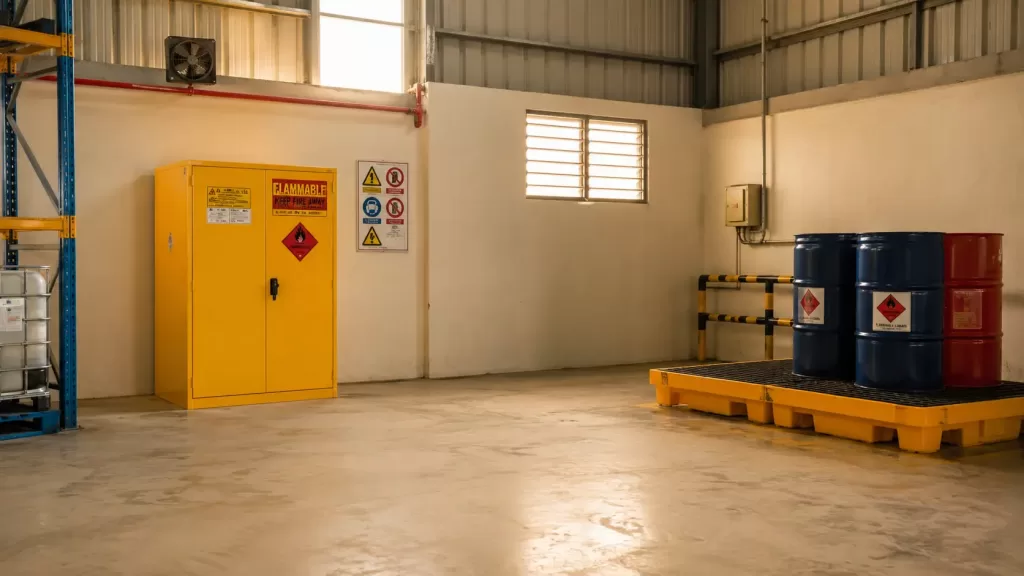
The first mistake is treating storage as an afterthought. Flammable and combustible liquids need a dedicated, ventilated space away from ignition sources, not a shelf near an electrical panel or a spot beside a loading dock. Facilities that store combustible & flammable liquids, corrosives, chemicals and acids in dedicated safety cabinets reduce fire spread risk substantially, since these units are built with double-wall steel construction and self-closing doors designed to keep flames and heat contained if ignition occurs.
Spectrum Lines, a UAE-based supplier of industrial safety equipment, notes that its cabinets are designed to withstand environmental changes and accidental fire breakouts, with construction that supports compliance under NFPA and OSHA frameworks depending on the model. That distinction matters. A cabinet without grounding provisions or vented construction is just a metal box. One built to those standards actively works to slow a fire rather than feed it.
Ignoring Spill Containment Until It Is Too Late
The second mistake shows up after the liquid is already out of its container. Many sites store flammable drums directly on bare flooring, with no barrier between the container and the ground. If a drum leaks or a valve fails, that liquid spreads across the floor, soaks into cracks, and becomes both a fire hazard and an environmental one.
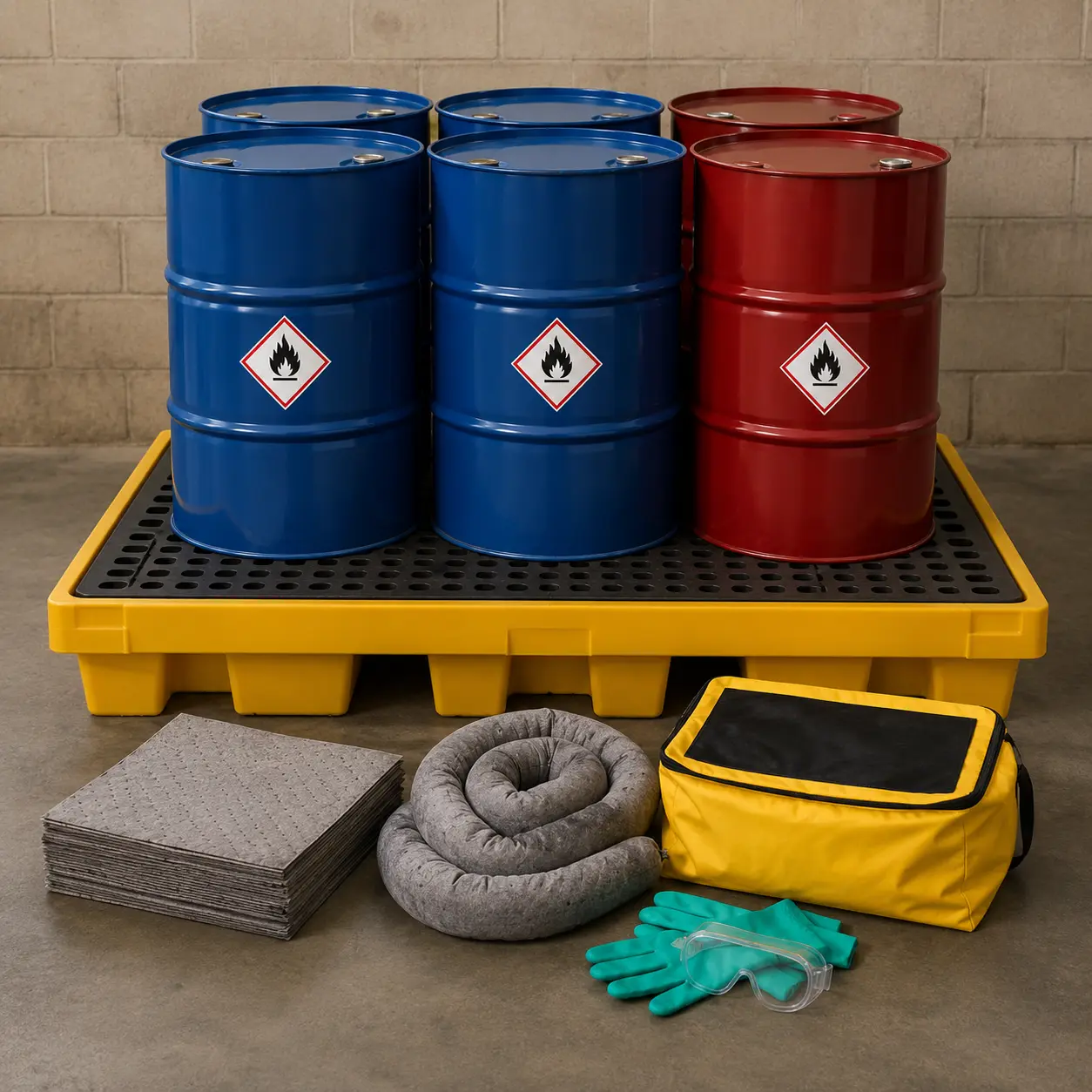
Spill pallets exist for exactly this scenario. These containment platforms, built from UV-resistant polyethylene or polypropylene, sit under drums and catch anything that escapes, based on sump capacity rated for low, medium, or high-volume storage needs. Pairing pallets with spill trays under smaller containers or dispensing points adds a second layer of catch protection in areas where full pallets are impractical, such as under a single fuel can or a bench-mounted solvent dispenser.
Understocking Or Neglecting Absorbents
A cabinet and a pallet solve containment. They do not solve cleanup. This is where a lot of sites fall short. Spill kits sit unused in a back office instead of near the point of risk, or worse, they sit empty because nobody replaced the absorbent pads after the last incident.
Absorbents made of pure polypropylene are built to soak up ten to twenty times their own weight, and they need to be matched to the type of spill. Oil-based absorbents behave differently from chemical absorbents rated for substances like sodium hydroxide or hydrofluoric acid. Keeping the wrong type on hand, or running low without anyone noticing, turns a five-minute cleanup into a much longer, messier problem.
Poor Staff Awareness Around Storage Rules
Equipment only works if people use it correctly. Staff who open cabinet doors, stack incompatible chemicals together, or store flammables next to oxidizers create risk that no amount of hardware can offset. Regular walkthroughs, clear labeling, and short refresher briefings on what belongs where cost very little and catch problems before they become incidents.
Skipping Routine Inspection Of Storage Equipment
Cabinets, pallets, and kits degrade with use. Grounding wires loosen. Absorbent stock expires or gets used without replacement. A monthly check of hinges, seals, and stock levels takes minutes and closes a gap that often goes unnoticed until an audit or, worse, an actual spill exposes it.
Final Thoughts
Flammable liquid storage is rarely undone by one dramatic failure. It usually comes apart through small, repeated shortcuts; a door left open, a pallet skipped, a kit left empty. Facilities that treat containment, absorbents, and staff habits as one connected system tend to avoid the incidents that make headlines. What does your current storage setup still leave exposed?
FAQ
Once a month is a reasonable minimum for most industrial sites. Look at hinge tension, door seals, and whether the grounding wire is still intact. High-use facilities handling heavy solvent traffic should check weekly instead.
Only if they are compatible. Mixing incompatible substances, like acids near flammables, on one containment surface increases reaction risk. Keep separate pallets for separate chemical families whenever your storage layout allows it.
Not usually. Trays work well under small containers or dispensing points where volume is limited. Full drum storage still needs a rated spill pallet sized for that container's sump capacity.
Safer than the raw spill, but still hazardous. The gel immobilizes the liquid so there is no splash risk and reduced vapor. Full PPE should still be worn during cleanup, and the collected waste has to be handled as hazardous material for disposal. Do not treat the solid form as inert just because it no longer pours.